
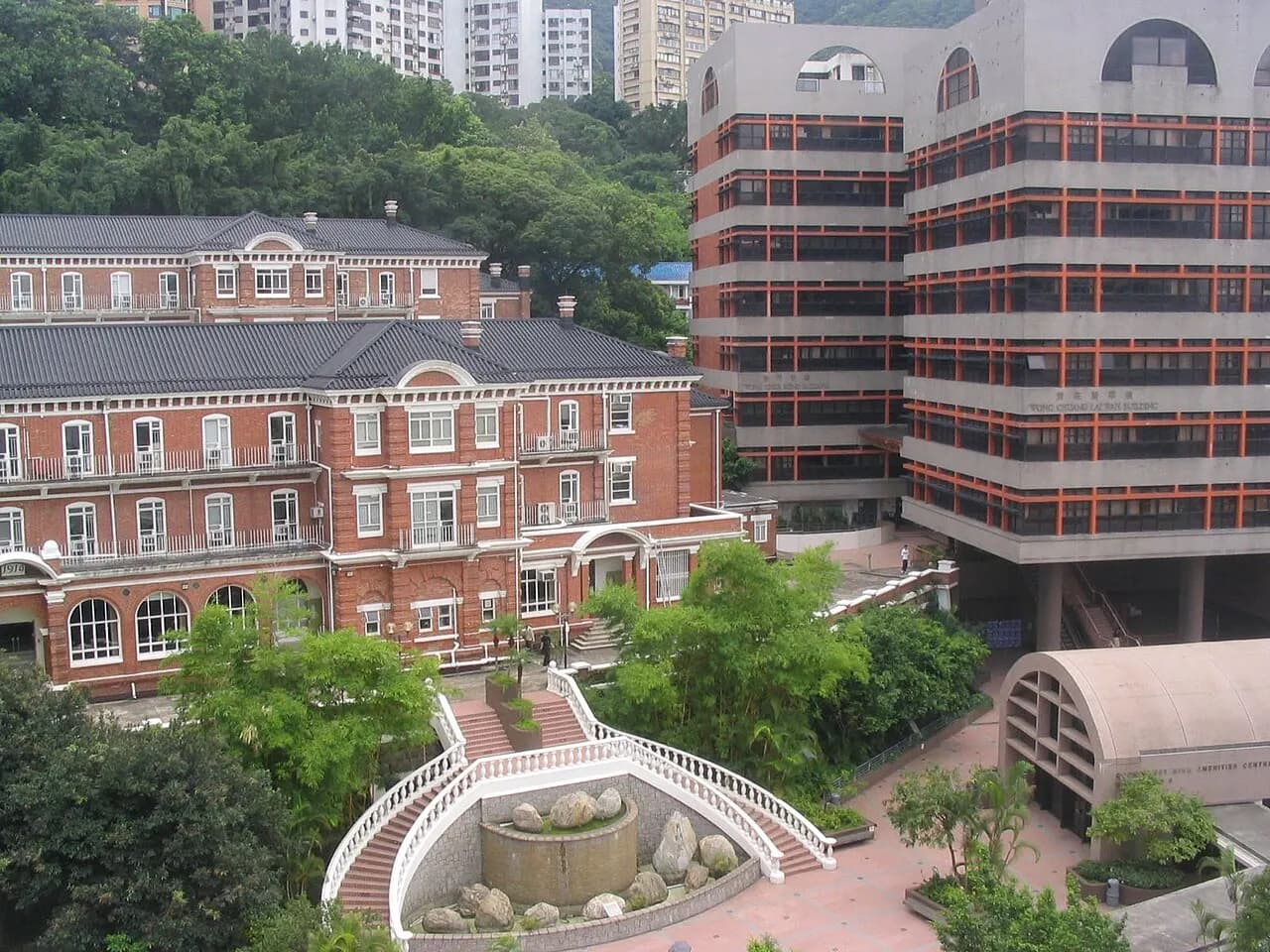
Photo: Baycrest · CC BY-SA 2.5
Hong Kong · Hong Kong Island, Pok Fu Lam
University of Hong Kong
Hong Kong's oldest university, on a hillside above the harbour, taught in English
- QS World Ranking 2026
- #11
- Founded
- 1911
- Students
- 32,000
- Bachelor's degree
- 4 years
- Acceptance rate
- Competitive for non-local places; medicine and law take only the highest IB scores
- Typical IB offer
- 38–42 points; medicine and law typically 42+
- Language of instruction
- English
Worth knowing
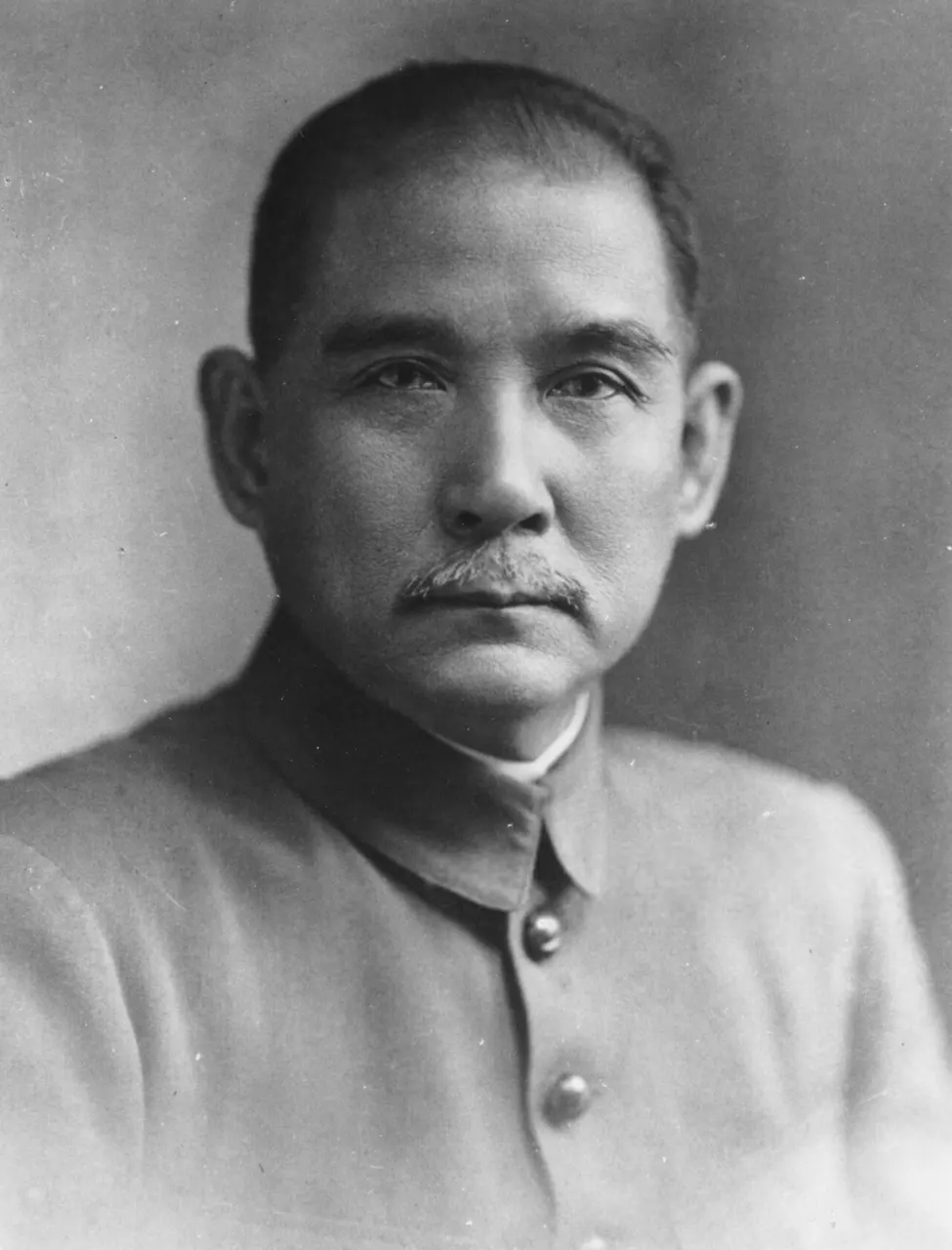
Sun Yat-sen, the first president of the Republic of China, trained at the Hong Kong College of Medicine for Chinese, the institution HKU grew out of, and later said that Hong Kong was where his revolutionary ideas were born. The campus climbs a steep hillside above the harbour, and double-decker trams and a network of covered escalators do much of the climbing for you.
How hard is it to get in, and why
Hong Kong reserves a limited quota for non-local students, and HKU fills it with applicants from across Asia and Europe holding IB scores in the high thirties and low forties. Medicine, dentistry and law are the bottlenecks, with interviews and, for medicine, a multi-station assessment. Everything else is decided largely on the score and subject fit, which makes the process fast and predictable but unforgiving. The upside is that a very high IB score is rewarded openly with money rather than just a place.
What it costs
Tuition
$25k–28k per year
Non-local tuition is HK$198,000 a year for most programmes as of the 2025/26 intake, the same across faculties. Converted at about 0.128 dollars to the Hong Kong dollar.
Living costs
$12k–18k per year
Scholarships and financial aid
HKU awards entrance scholarships automatically on the strength of the IB score, and the top band can cover full tuition plus a living allowance for the whole degree. Scores in the low forties are usually enough to attract a substantial award, which makes Hong Kong one of the better value propositions for a strong IB candidate. Additional need-based bursaries exist for continuing students.
How to apply
International applicants apply directly to HKU, with the main round usually opening in September and closing in November, and a later round running into the spring while places remain. You submit predicted IB results, a personal statement and your programme choices. Medicine, dentistry, law, and some business and social science programmes interview shortlisted candidates between December and April. Offers are conditional on final IB results in July.
Official websiteWhat makes it special
- Founded in 1911, HKU is the oldest university in Hong Kong, and its Main Building with the clock tower is a declared monument.
- The medical faculty identified the SARS coronavirus in 2003 and has been central to global work on emerging respiratory viruses ever since.
- Teaching is in English throughout, and the common core curriculum makes every student take courses far outside their own faculty.
- Residential halls have strong traditions and their own culture, and places are limited, so apply for housing at the same time as admission.
- The city is a two-hour flight from most of Southeast Asia, and hiking trails and beaches start within half an hour of the campus.
About studying in Hong Kong
English-taught four-year degrees at universities ranked in the world's top fifty, in a city wedged between mountains and sea. Tuition for non-local students is around US$25,000 a year, and both HKU and HKUST offer generous entrance scholarships that can cover everything for the highest IB scores. Applications are direct, with main-round deadlines in late autumn.
Teaching staff
Who runs the university, who teaches, and how lessons actually work.
- Academic and research staff
- 9 000+
- Faculties
- 10
- Common Core Areas of Inquiry
- 5
HKU counts more than 9,000 staff on academic and research contracts across the university and teaches around 32,000 students, split almost evenly between undergraduate and postgraduate. The faculty is drawn from across the world — a majority of professorial appointments come from outside Hong Kong — and the university is the oldest in the territory, founded in 1911 out of the Hong Kong College of Medicine. The president and vice-chancellor since 2018 is Xiang Zhang, a physicist known for work on metamaterials and optical superlenses. Ten faculties sit under him, each with its own dean: Architecture, Arts, Business and Economics, Dentistry, Education, Engineering, Law, Science, Social Sciences and the Li Ka Shing Faculty of Medicine.
English is the medium of instruction throughout, with lectures supported by tutorials of a dozen students and, in medicine and law, problem-based learning in small groups from the first year. Hong Kong moved to a four-year bachelor's degree in 2012, and the extra year is spent largely on the Common Core Curriculum: every undergraduate must take courses outside their own faculty across five Areas of Inquiry — scientific and technological literacy, arts and humanities, global issues, China's culture, state and society, and, added recently, artificial intelligence. Grading follows a letter scale with a cumulative GPA, and the medical and law faculties run their own clinical and moot-court assessments. Undergraduate research runs through summer research fellowships and a capstone or dissertation in the final year.
HKU's reputation rests heavily on its medical faculty, which identified the SARS coronavirus in 2003 and was among the first laboratories worldwide to publish on the virus behind COVID-19. Every undergraduate is expected to complete two experiential learning requirements — one international, one involving mainland China — and over a thousand students a year go on exchange to partner universities in forty countries. The campus climbs a steep hillside in Pok Fu Lam above the harbour, with covered escalators and lifts built into the slope doing much of the climbing; the Main Building of 1912, with its colonnade and clock tower, is a declared monument and still holds teaching rooms.
Teachers worth knowing
- Y1995–now
Yuen Kwok-yung
Henry Fok Professor in Infectious Diseases, Department of Microbiology
- Teaches
- Clinical microbiology · Emerging infectious diseases
- Experience
- Chair of infectious diseases at HKU since the 1990s; led the team that discovered SARS-CoV-1 in 2003 and co-directs the State Key Laboratory of Emerging Infectious Diseases.
- L2002–now
Leo Poon
Professor and Head of the Division of Public Health Laboratory Sciences, School of Public Health
- Teaches
- Virology · Public health laboratory science
- Experience
- At the HKU School of Public Health since the early 2000s; co-director of the HKU–Pasteur Research Pole and author of WHO diagnostic protocols for coronaviruses.
- D2022–now
Daniel A. Bell
Chair Professor of Political Theory, Faculty of Law
- Teaches
- Political theory · Chinese political philosophy and Confucianism
- Experience
- Chair of political theory at HKU since 2022; previously dean of political science at Shandong University and a professor at Tsinghua.
The campus in photographs
Photographs come from Wikimedia Commons under free licences; the author and licence are shown on each image.
People who studied or taught here
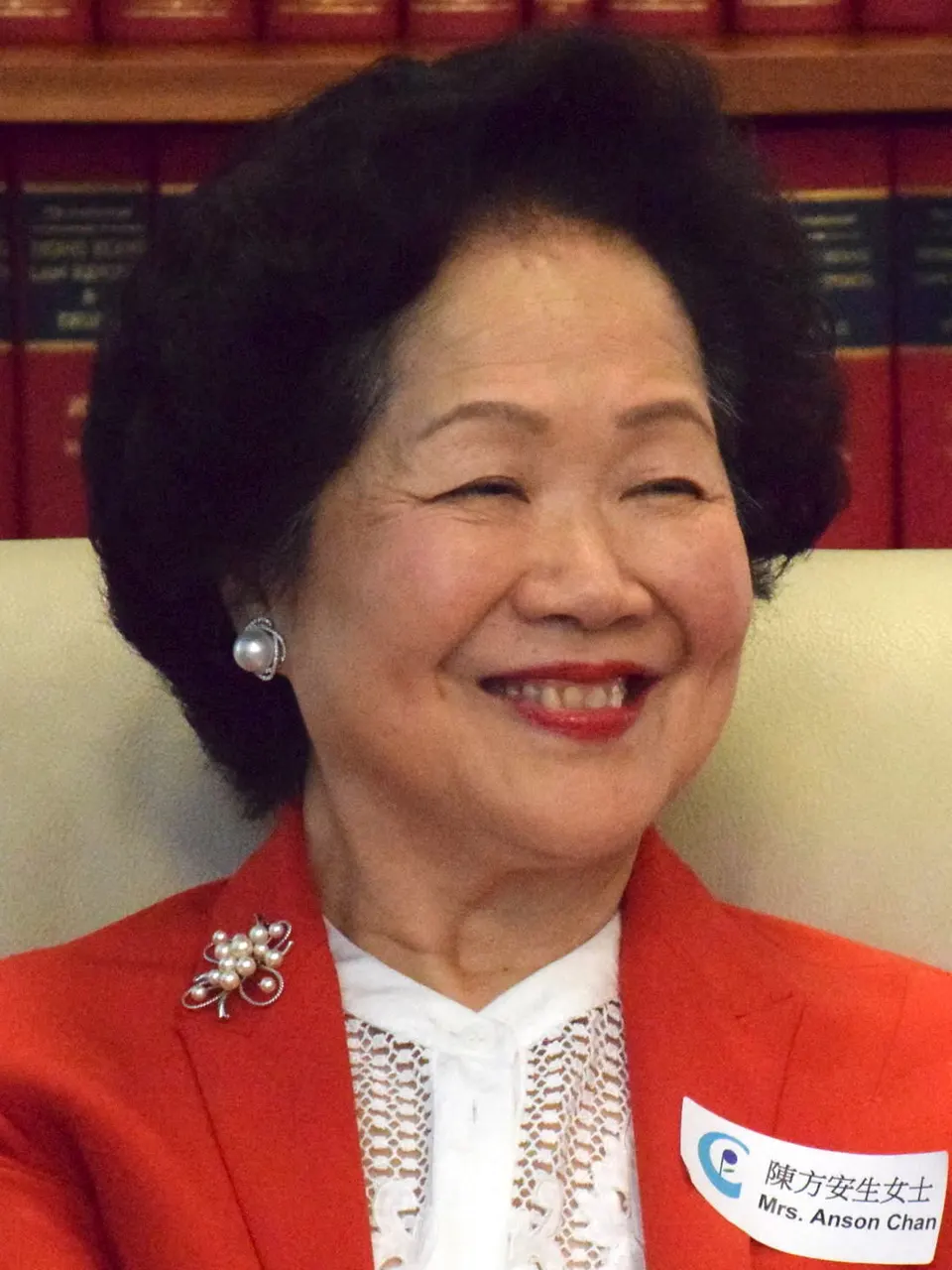
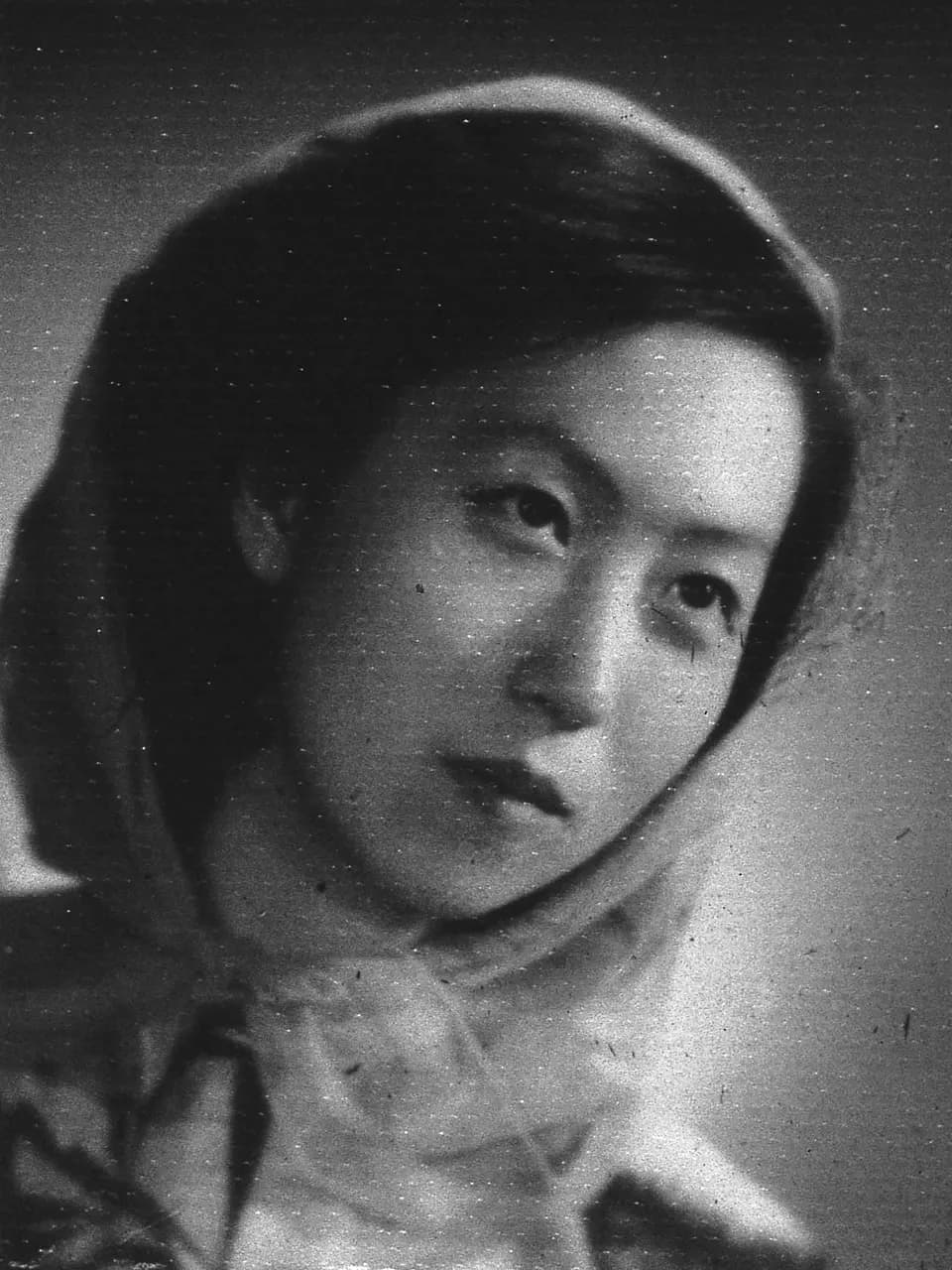 Eileen Chang
Novelist, one of the most important Chinese writers of the century
Left without a degree · 1939–1941
- Y
Reviews
No reviews yet. Visited, applied, or studied here? Be the first.