
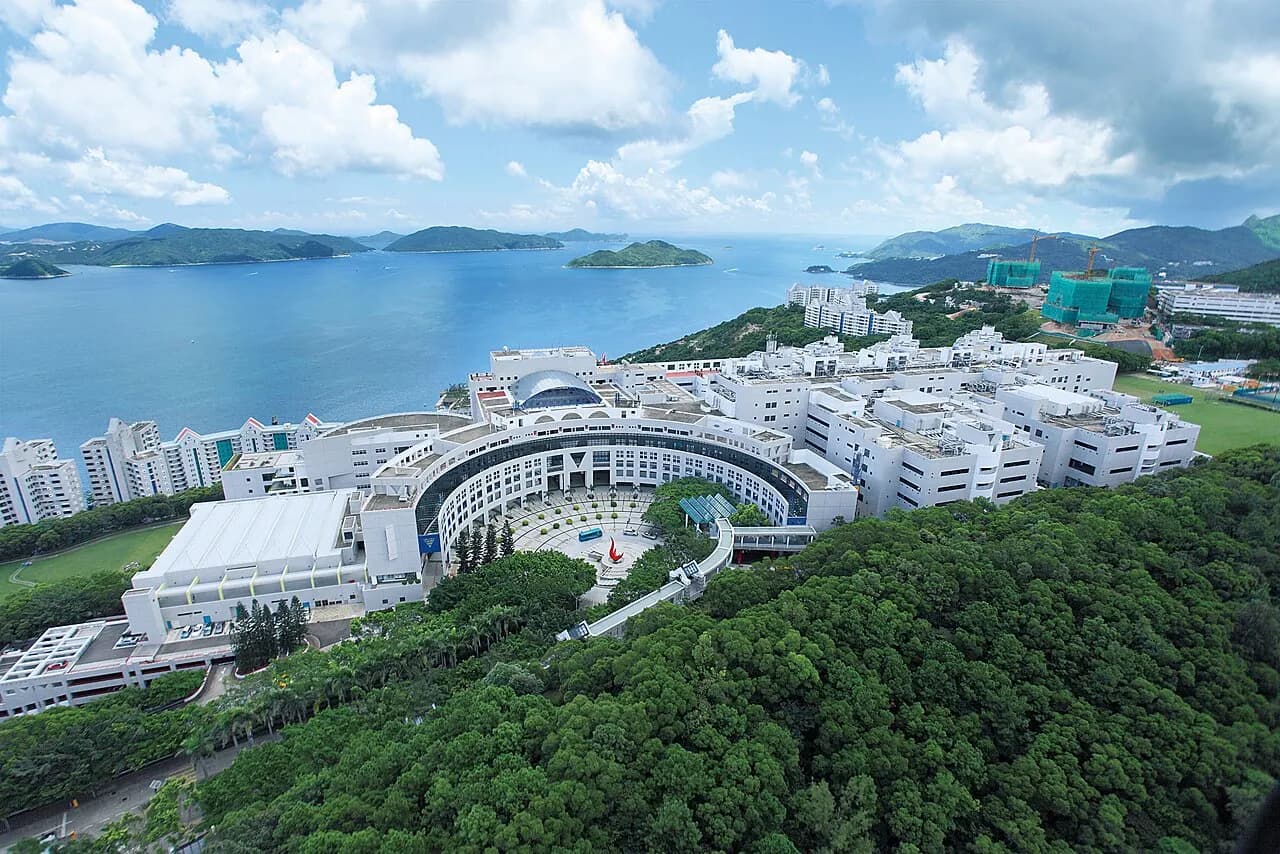
Photo: Hkust pao · CC BY-SA 3.0
Hong Kong · Hong Kong, Clear Water Bay
Hong Kong University of Science and Technology
Founded in 1991 and already among Asia's best, on a campus that faces the sea
- QS World Ranking 2026
- #44
- Founded
- 1991
- Students
- 17,000
- Bachelor's degree
- 4 years
- Acceptance rate
- Competitive but more accessible than HKU for strong science applicants
- Typical IB offer
- 35–40 points; business and quantitative finance at the top of the range
- Language of instruction
- English
Worth knowing
The campus stands directly on the shore of Clear Water Bay, and lecture halls look out over the water; the university claims one of the most spectacular settings of any campus in the world. At the main entrance stands a huge red steel sculpture, a stylised sundial nicknamed the Red Bird, and students joke that HKUST really stands for the Hong Kong University of Stress and Tension.
How hard is it to get in, and why
HKUST is younger and more specialised than HKU, which means fewer applicants per place outside the flagship business and computing programmes. Admission is decided on the IB score and subject fit, with Higher Level mathematics expected across science and engineering. Business, quantitative finance and the dual-degree tracks interview and are genuinely hard. For a science-minded IB student in the high thirties, this is one of the more realistic routes into a world-top-50 university.
What it costs
Tuition
$25k–28k per year
Non-local tuition is HK$198,000 a year as of the 2025/26 intake, the same across programmes. Converted at about 0.128 dollars to the Hong Kong dollar.
Living costs
$12k–18k per year
Scholarships and financial aid
Entrance scholarships are awarded automatically on academic merit and range from partial tuition to full tuition plus a hostel and living allowance for the highest IB scores. The University Scholarship Scheme adds further awards for continuing students who perform well. As at HKU, a strong IB score converts directly into money.
How to apply
Apply directly to HKUST; the main round for international applicants typically runs from September to early January, with later rounds if places remain. Predicted IB results, a personal statement and programme choices form the core of the application. Business, quantitative finance and dual-degree programmes interview shortlisted applicants in the spring. Offers are conditional on final results.
Official websiteWhat makes it special
- The business school's undergraduate programmes and its joint quantitative finance degree are among the most sought-after in Asia.
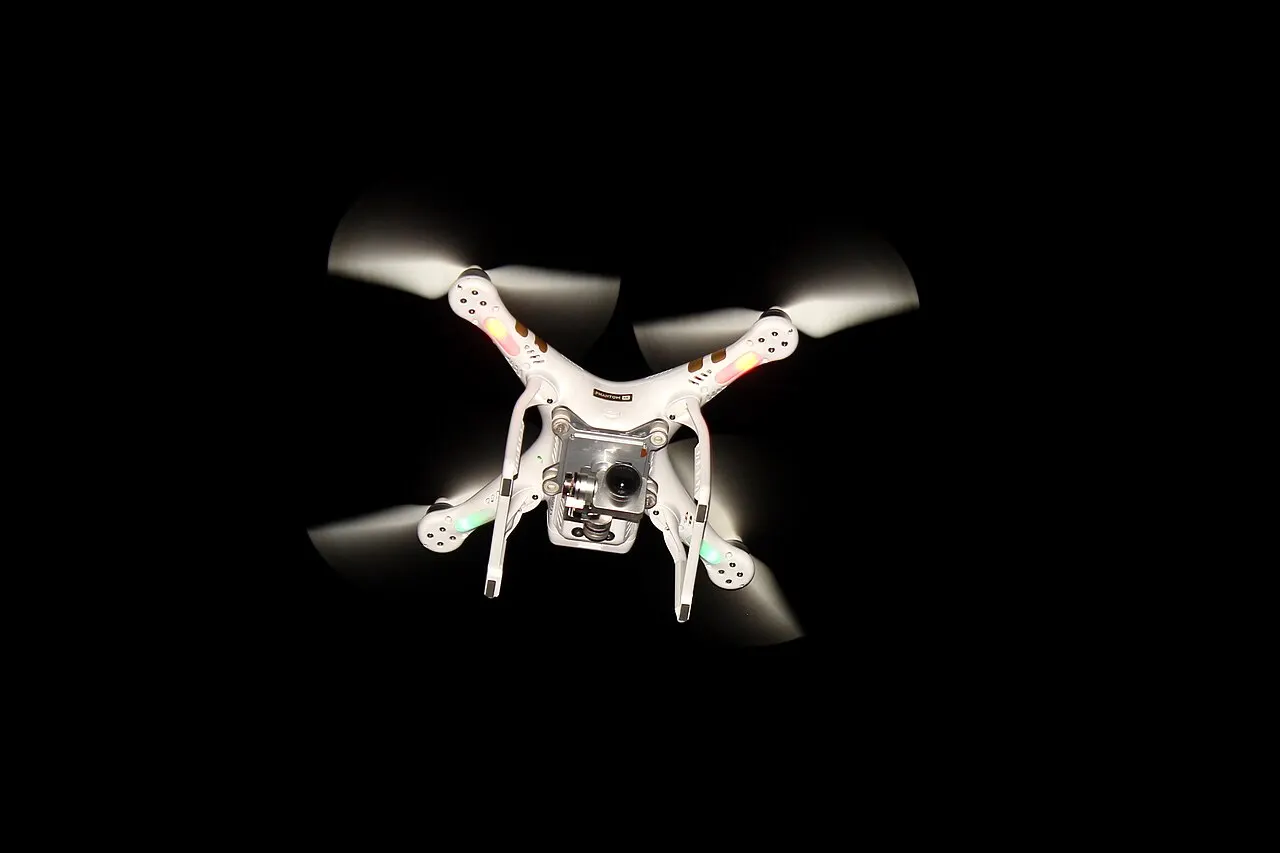
- Robotics, AI and materials research are the research strengths, and the university has spun out companies including the drone maker DJI.
- The whole campus is one connected complex built into the hillside, so you can cross it under cover in minutes, which matters in typhoon season.
- Students take a broad set of common core courses alongside their major, and exchange places at partner universities are unusually plentiful.
- Clear Water Bay is out of town, surrounded by country parks and hiking trails, which makes for a quieter student life than central Hong Kong.
About studying in Hong Kong
English-taught four-year degrees at universities ranked in the world's top fifty, in a city wedged between mountains and sea. Tuition for non-local students is around US$25,000 a year, and both HKU and HKUST offer generous entrance scholarships that can cover everything for the highest IB scores. Applications are direct, with main-round deadlines in late autumn.
Teaching staff
Who runs the university, who teaches, and how lessons actually work.
- Academic staff
- ~970
- Student–faculty ratio
- 21:1
- Founded
- 1991
HKUST employs roughly 970 academic staff for some 20,000 students, which works out to about twenty-one students per member of faculty — a high ratio by the standards of older research universities, and a consequence of a campus that only opened in 1991. Nearly every professor holds a doctorate from a North American or European university, and the working language of the whole institution is English. The president is a neuroscientist, Nancy Ip, the first woman to hold the post; under her sit six academic units, each with a dean: the School of Science, the School of Engineering, the Business School, the School of Humanities and Social Science, the Academy of Interdisciplinary Studies, and a School of Medicine approved in 2025 with its first intake planned for 2028.
Teaching is structured the American way rather than the British one. A professor lectures, then the class splits into tutorials and laboratory sessions run by teaching assistants, and grades come from continuous assessment — problem sets, midterms, projects — rather than a single final examination. First-year engineering and science students enter by school rather than by department and choose a major at the end of the first year, after they have actually tried the subjects. The Undergraduate Research Opportunities Programme places students in working laboratories for credit or pay from the second year, and the co-op scheme with Hong Kong technology firms sends students out for full-time industrial placements of four to eight months.
The university's reputation was built unusually fast. Its business school ran the Kellogg-HKUST Executive MBA, ranked first in the world by the Financial Times in several years between 2007 and 2018. The Institute for Advanced Study brings Nobel laureates to the campus for extended visits rather than single lectures. And the university's entrepreneurship culture is concrete: DJI, now the world's largest consumer drone maker, was founded by an HKUST undergraduate out of a robotics project supervised by a professor who later became an investor in the company.
Teachers worth knowing
- P1997–now
Pascale Fung
Chair Professor of Electronic and Computer Engineering; Director, Centre for AI Research (CAiRE)
- Teaches
- Natural language processing · Conversational AI and speech systems
- Experience
- At HKUST since 1997; founded the Human Language Technology Center and later the Centre for AI Research.
- K1993–now
Khaled B. Letaief
New Bright Professor of Engineering, Department of Electronic and Computer Engineering
- Teaches
- Wireless communications and 6G systems · Edge computing and machine learning for networks
- Experience
- At HKUST since 1993; chair professor from 2005, New Bright Professor of Engineering since 2019; former Dean of Engineering.
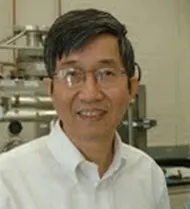 2013–now
Ching Wan Tang
IAS Bank of East Asia Professor, Institute for Advanced Study
- Teaches
- Organic electronics and OLED displays · Organic photovoltaics
- Experience
- At HKUST since 2013; previously twenty-eight years at Eastman Kodak and then a professorship at the University of Rochester.
The campus in photographs
Photographs come from Wikimedia Commons under free licences; the author and licence are shown on each image.
People who studied or taught here
Reviews
No reviews yet. Visited, applied, or studied here? Be the first.