
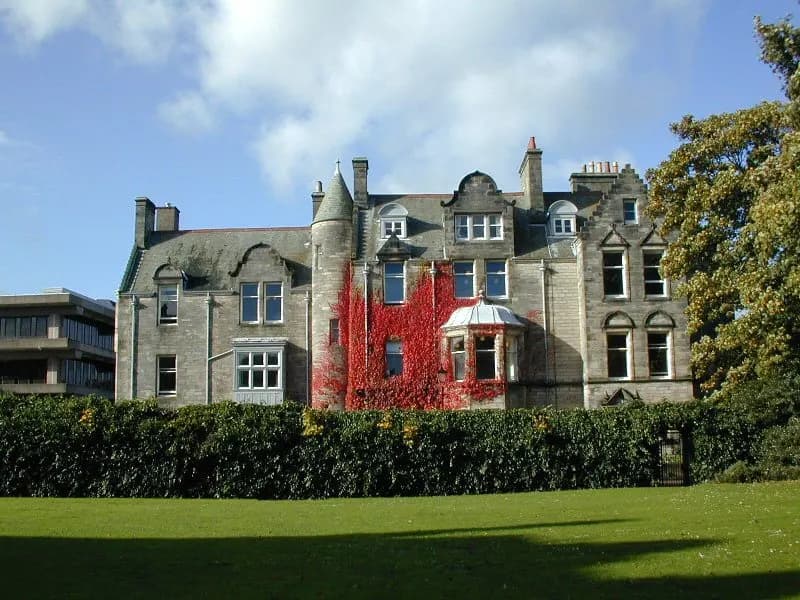
Photo: Wikimedia Commons · CC BY-SA 3.0
United Kingdom · St Andrews, Fife, Scotland
University of St Andrews
Scotland's oldest university: red gowns, a seaside town and the Home of Golf
- QS World Ranking 2026
- #113
- Founded
- 1413
- Students
- 11,600
- Bachelor's degree
- 4 years
- Acceptance rate
- 30–38% offer rate
- Typical IB offer
- 36–38
- Language of instruction
- English
Worth knowing
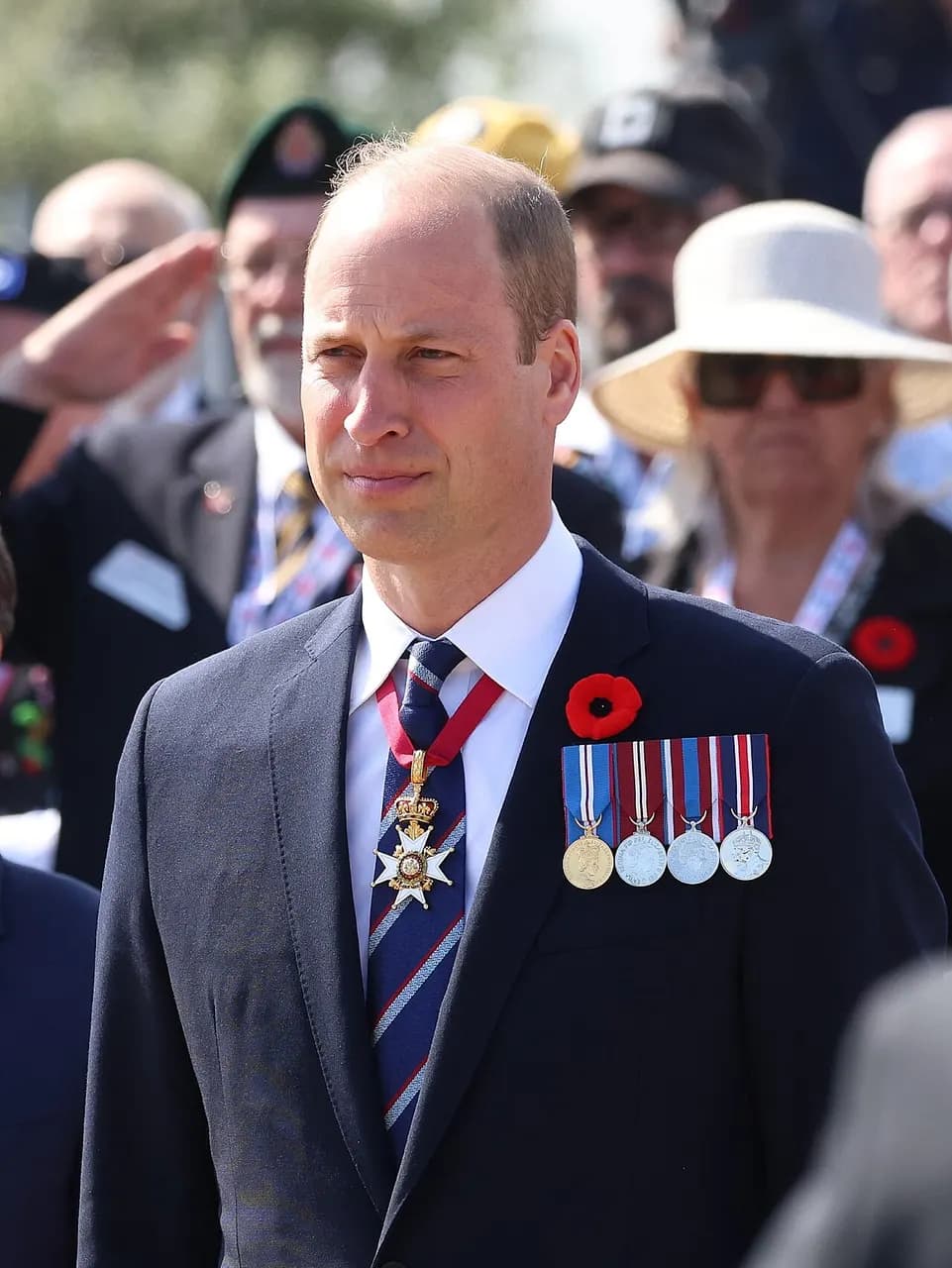
Undergraduates have worn scarlet gowns since the seventeenth century and still walk the harbour pier in them after chapel on Sundays. Prince William and Catherine Middleton met here as first-years in 2001, and next to the town lies the Old Course, where golf has been played since at least 1552; on Sundays it closes to golfers and becomes a public park anyone can stroll across.
How hard is it to get in, and why
Only about 30% of applications received an offer in 2025 (38% in 2024), and the standard entry level is 38 IB points with 6,6,6 at Higher Level, which is higher than at most Russell Group universities. The intake is small, around 2,000 undergraduates a year, so the popular schools are tight: Economics and Management made offers to 28% of applicants, Psychology to 30%. St Andrews states plainly that grades alone do not guarantee admission and reads the personal statement and reference closely. Medicine adds the UCAT, an interview and only a handful of overseas places.
What it costs
Tuition
$45k–54k per year
2026 entry: £33,250 for all Arts, Divinity and Science degrees, £39,620 for Medicine (includes the Scottish NHS teaching levy). Fees rise by about 3–5% a year during the degree.
Living costs
$18k–26k per year
Scholarships and financial aid
St Andrews is better than most UK universities here, though nobody should count on a full ride. The International Undergraduate Scholarship gives a need-based fee reduction of up to £10,000 a year for the whole degree (2026 entry; the 2027 value is confirmed in December 2026), the International Excellence Scholarship is a single full-fee award, and the International Accommodation Award pays at least £1,900 a year towards rent, again on need. All require a separate application through the applicant portal by late January, before offers are made.
How to apply
Apply through UCAS: 13 January 2027 for 2027 entry, 15 October 2026 for Medicine. Non-UK applicants are assessed against the standard entry level, typically 38 IB points with 6,6,6 at Higher Level (36 with 6,5,5 is the published minimum and rarely enough), plus predicted grades, the three-question personal statement and a reference. There are no interviews except for Medicine, which requires the UCAT and a multiple mini-interview and expects at least five top grades at GCSE level or equivalent. Applicants with a very strong IB can ask for direct entry to second year, which shortens the degree to three years. Scholarship applications are made separately through the applicant portal by late January.
Official websiteWhat makes it special
- Founded in 1413, the oldest university in Scotland and the third-oldest in the English-speaking world after Oxford and Cambridge. The town has about 17,000 residents, a third of them students, and three medieval streets running down to the North Sea; there is no campus as such, the university is the town.
- Traditions matter: academic 'families' where third-years adopt first-years, Raisin Weekend with its foam fight in October, the May Dip into the North Sea at dawn on 1 May, and the PH initials set in the cobbles outside St Salvator's that students step around to avoid failing their degree.
- Regularly first, second or third in the Guardian and Times UK league tables, ahead of Oxford and Cambridge in some years. International Relations is one of the strongest schools in the country; Physics and Astronomy, Computer Science, English, Economics and Management also rank near the top.
- A four-year Scottish degree with a flexible first two years, so you can combine, say, Economics with International Relations before choosing honours. Medicine is a three-year BSc at St Andrews followed by three clinical years at a partner school; overseas students complete the clinical stage at Manchester.
- Around 45% of students come from outside the UK, with a large North American contingent; the university runs its own US federal loan scheme. Edinburgh is 90 minutes away by train and bus, and the Old Course is a ten-minute walk from most lectures.
About studying in United Kingdom
Three-year degrees in England (four in Scotland), and you apply for one subject rather than for a university in general. UCAS allows five choices, only one of which can be Oxford or Cambridge, with a 15 October deadline for those two and for medicine. Oxbridge adds admissions tests and interviews; IB offers at the top range from 38 to 42. International fees run from about £25,000 to £45,000 a year, need-based aid is scarce, and graduates can stay on to work for a limited period under the Graduate visa.
Teaching staff
Who runs the university, who teaches, and how lessons actually work.
- Student–faculty ratio
- 9:1
- Academic staff
- ~1 340
- Founded
- 1413
St Andrews is small by British standards: about 1,340 academic staff for roughly 11,600 students, close to nine students per member of staff, and the smallness is the point. The principal, a specialist in medieval Scottish literature, leads four faculties — Arts, Divinity, Medicine and Science — that between them contain eighteen schools, each run by a head of school. Divinity has existed since 1537 and Scotland's oldest chair of Hebrew sits inside it; the School of Physics and Astronomy runs its own observatory and co-founded the WASP exoplanet survey.
Teaching follows the Scottish four-year pattern, which changes what the first two years feel like. Students take three subjects in first year and usually three again in second, and only declare an honours subject at the end of year two, so the early timetable is lectures plus tutorials of six to eight students across several unrelated fields. Honours years narrow sharply into seminars and a supervised dissertation. Continuous assessment carries real weight alongside end-of-year examinations, and small student numbers mean undergraduates routinely work on staff research projects — several WASP planet detections have undergraduate names on the papers.
The traditions here are older than most of the country's universities. Every student can take an academic parent under the Bejant system, culminating in Raisin Weekend, when third-years dress their academic children in costume and march them to the quad. The Pier Walk after Sunday chapel and the May Dip — swimming in the North Sea at dawn on 1 May — are kept up without any institutional encouragement. The red undergraduate gown is worn to lectures by choice, and the way a student wears it on the shoulders signals which year they are in.
Teachers worth knowing
- A1990–now
Andrew Collier Cameron
Professor of Astronomy, School of Physics and Astronomy
- Teaches
- Exoplanet detection · Stellar activity and rotation
- Experience
- Head of the School of Physics and Astronomy 2012–2015; co-founder of the WASP survey, which has found more than 170 planets.
- A1970–now
Andrew Whiten
Emeritus Wardlaw Professor of Evolutionary and Developmental Psychology
- Teaches
- Social learning and cultural evolution · Primate cognition
- Experience
- At St Andrews since 1970, professor since 1997; his 1999 Nature paper established that chimpanzees have culture.
 2006–now
Sharon Ashbrook
Professor of Physical Chemistry, School of Chemistry
- Teaches
- Solid-state NMR spectroscopy · Materials chemistry
- Experience
- At St Andrews since 2006; more than 110 peer-reviewed papers and the Royal Society of Chemistry's Bourke–Liversidge Award in 2021.
The campus in photographs
Photographs come from Wikimedia Commons under free licences; the author and licence are shown on each image.
People who studied or taught here
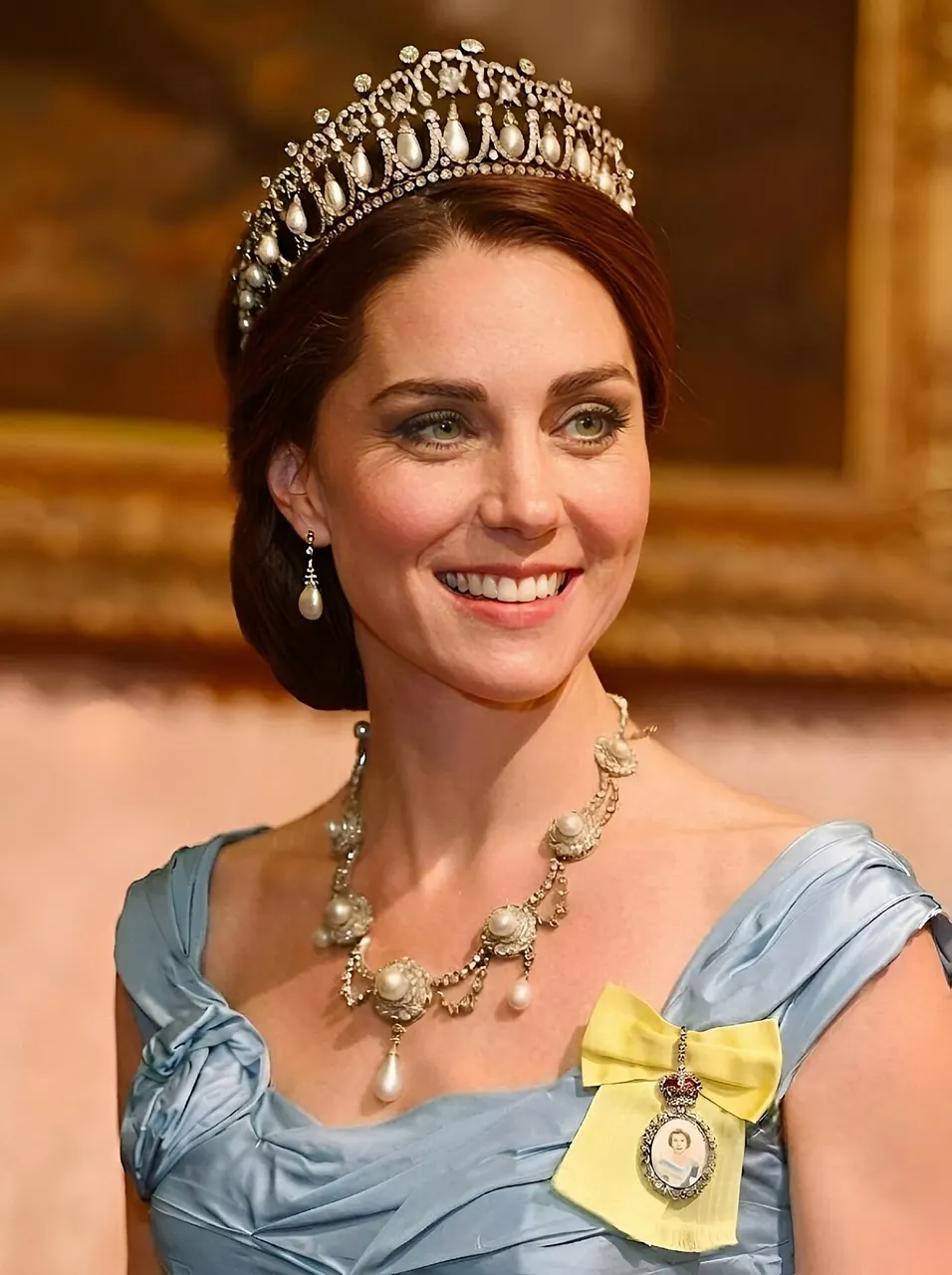 Catherine, Princess of Wales
Princess of Wales, patron of arts and early childhood charities
Graduate · 2001–2005
Reviews
No reviews yet. Visited, applied, or studied here? Be the first.