
Physics
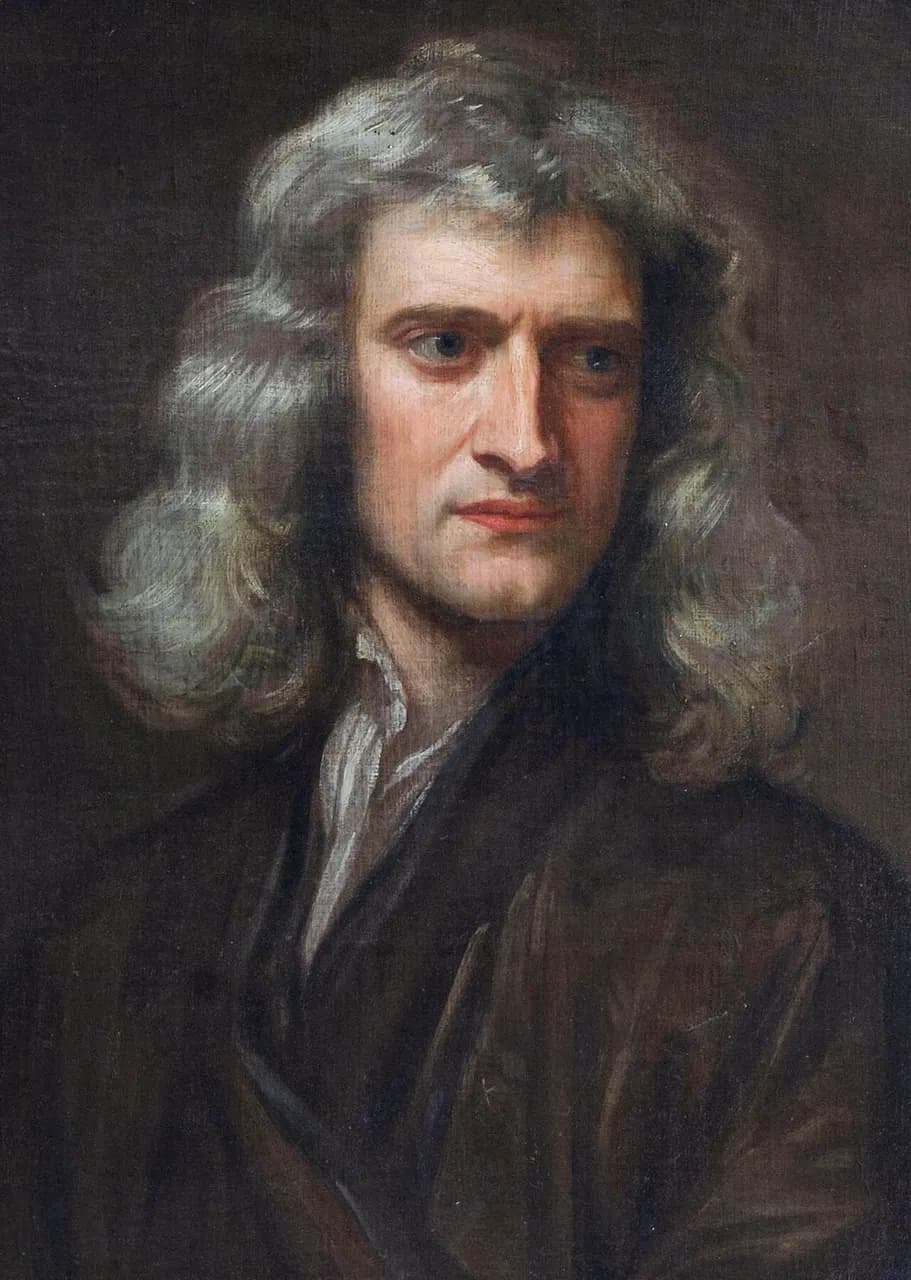
Isaac Newton
Physicist and mathematician, author of the Principia
Born 1643 · Died 1727
Photo: James Thronill after Sir Godfrey Kneller · Public domain
«If I have seen further it is by standing on the shoulders of giants.»
Isaac Newton formulated the laws of motion and universal gravitation, invented calculus and worked out that white light is a mixture of colours. His Principia is usually considered the single most important book in the history of science.
Key achievements
- Published the Principia in 1687, founding classical mechanics
- Formulated universal gravitation and the laws of motion
- Lucasian Professor of Mathematics at twenty-six
Universities
Cambridge, England
Entered Trinity College in 1661 as a subsizar, a student who paid his way by serving others, and became Lucasian Professor of Mathematics at twenty-six.
Facts
- The university closed for plague in 1665 and he went home for two years, in which he did much of his work on calculus, optics and gravitation.
- He once slid a needle between his eyeball and the bone to test a theory about how vision works, and recorded the results calmly.
- A descendant of the apple tree from his family home grows outside the gate of Trinity College.
- As Master of the Royal Mint he personally pursued counterfeiters and sent several to the gallows.
Photographs
Photographs come from Wikimedia Commons under free licences; the author and licence are shown on each image.