
Physics
Johannes van der Waals
Physicist, Nobel Prize in Physics 1910 for the equation of state of gases and liquids
Born 1837 · Died 1923
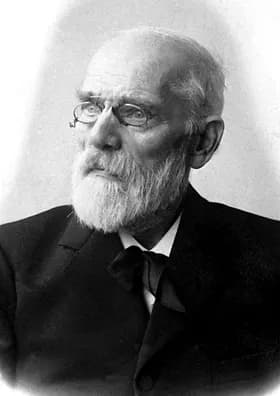
Photo: Nobel foundation ? · Public domain
Johannes van der Waals wrote an equation describing how real gases behave by accounting for the size of molecules and the weak forces between them. Those forces now carry his name and explain why geckos can climb glass.
Key achievements
- Nobel Prize in Physics, 1910, for the equation of state
- Van der Waals forces are named after him
- Was a schoolteacher before becoming a professor at 40
Universities
Amsterdam
Professor of physics from 1877 to 1907, having been a schoolteacher before entering academia.
Facts
- He came from a poor family, could not afford classical languages required for university entry, and taught himself while working as a schoolmaster.
- His work made the liquefaction of helium possible, which in turn led to the discovery of superconductivity.
- James Clerk Maxwell said that van der Waals's name would soon be among the foremost in molecular science.
Photographs
Photographs come from Wikimedia Commons under free licences; the author and licence are shown on each image.