
Physics
Pieter Zeeman
Physicist, Nobel Prize in Physics 1902 for the effect of magnetism on light
Born 1865 · Died 1943
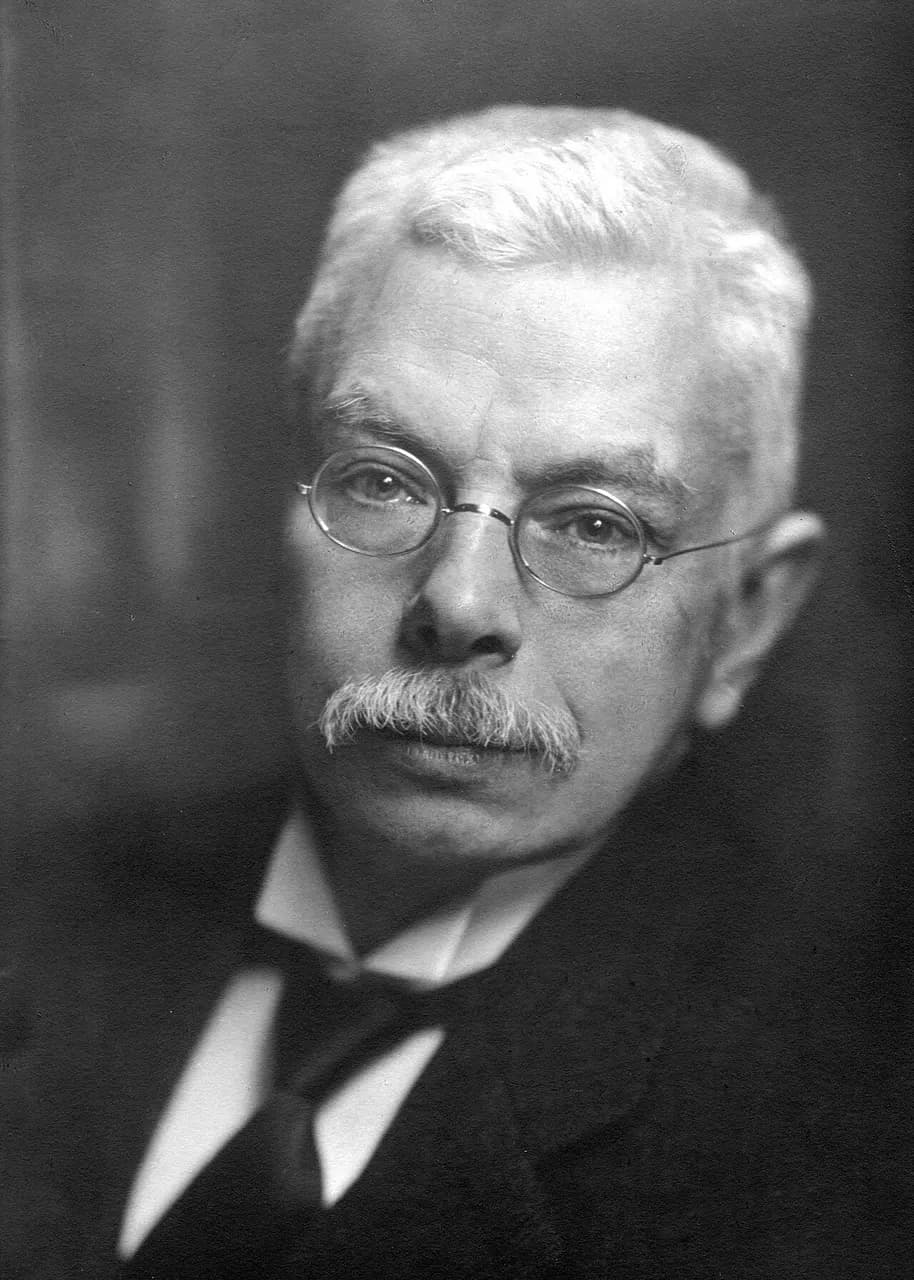
Photo: Unknown authorUnknown author · Public domain
Pieter Zeeman discovered that a magnetic field splits spectral lines into several components, which gave physicists a way to measure magnetic fields in distant stars. The effect is fundamental to understanding atomic structure.
Key achievements
- Nobel Prize in Physics, 1902, for the Zeeman effect
- Showed magnetic fields split spectral lines
- Amsterdam's physics laboratory now bears his name
Universities
Amsterdam
Professor of physics from 1900 and director of the physics laboratory that now bears his name.
Facts
- He performed the experiment against his supervisor's instructions and was reprimanded for it before the result proved important.
- Astronomers use the Zeeman effect to map magnetic fields on the surface of the Sun.
- He shared the Nobel Prize with Hendrik Lorentz, who had predicted the effect theoretically.
Photographs
Photographs come from Wikimedia Commons under free licences; the author and licence are shown on each image.