
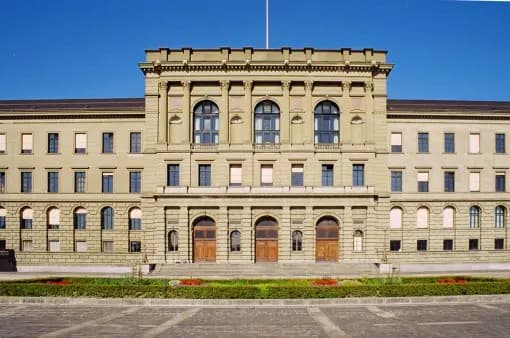
Photo: Anand Kesari · Public domain
Switzerland · Zurich
ETH Zurich
Continental Europe's top university, at a fraction of the price of the Ivy League
- QS World Ranking 2026
- #7
- Founded
- 1855
- Students
- 27,000
- Bachelor's degree
- 3 years
- Acceptance rate
- Open to qualified applicants, no quota; roughly a third fail the first-year exams
- Typical IB offer
- 38/42 without core bonus; HL Maths, HL Physics/Chemistry/Biology, HL Language A; otherwise a reduced entrance exam
- Language of instruction
- German. Every bachelor's programme is taught in German; a C1 certificate (TestDaF 4×4 or Goethe C1) must be in the application by 31 March. Master's programmes are mostly in English.
Worth knowing
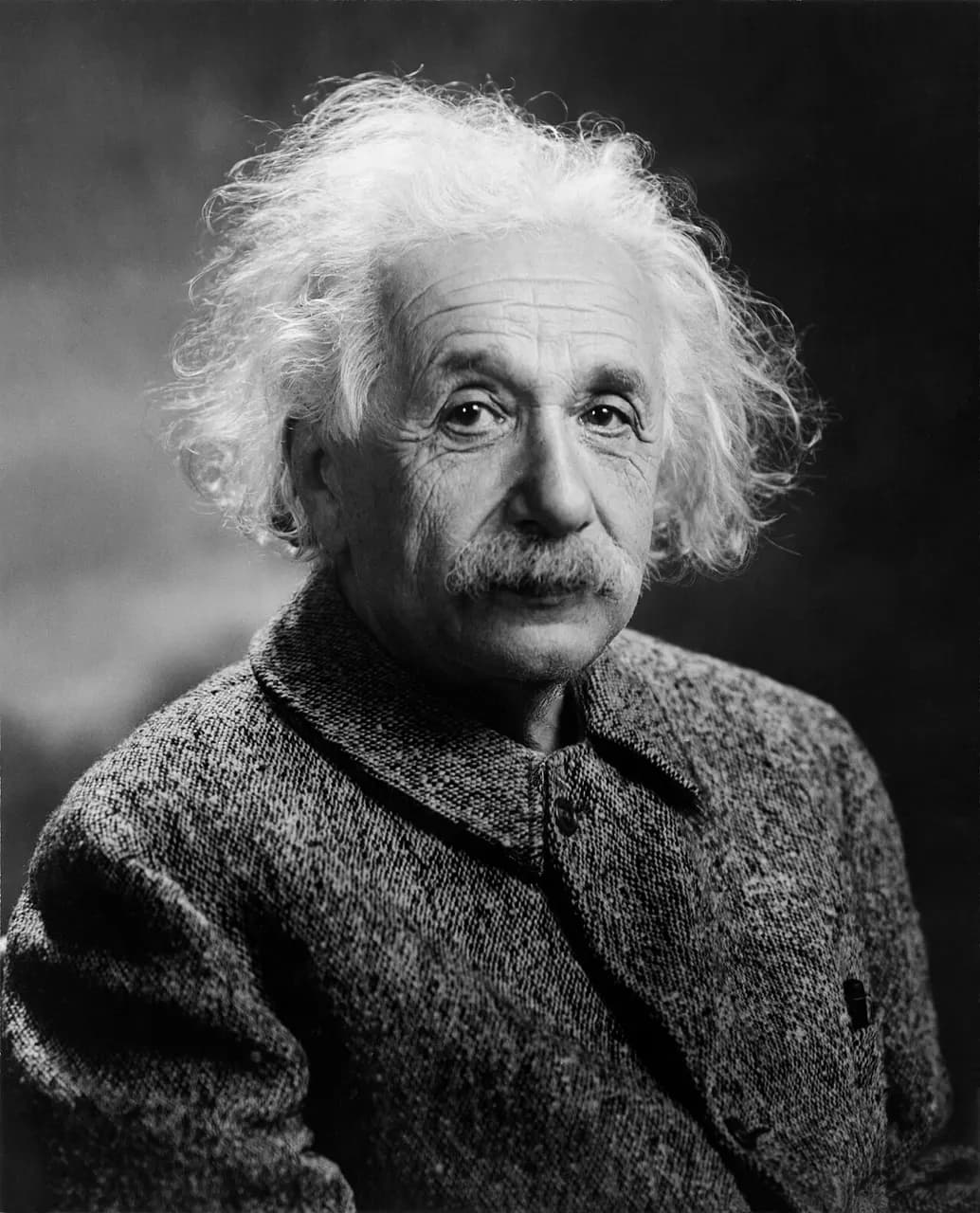
Albert Einstein studied here from 1896 to 1900, failed to land an assistant's post after graduating, and came back in 1912 as a full professor of theoretical physics. The little red Polybahn funicular has been hauling students from Central up to the Polyterrasse since 1889; the ride takes 100 seconds and ends with a view over the old town and the Alps.
How hard is it to get in, and why
There is no selection in the American sense: an IB Diploma that meets the published subject and points thresholds gets you in without an exam, an interview or an essay. The filter comes a year later. The Basisprüfung, a block examination on the whole first year, eliminates roughly 30–40% of each intake, and it may be repeated only once. Add the German C1 requirement, which stops many international applicants before they start.
What it costs
Tuition
$5k–6k per year
Since autumn 2025 new international students pay CHF 2 190 per semester (three times the Swiss rate of CHF 730) plus about CHF 74 in semester fees, roughly CHF 4 530 a year. Students who finished school in Switzerland stay on the lower rate.
Living costs
$27k–36k per year
Scholarships and financial aid
There are no entry scholarships for international bachelor's applicants. Need-based social scholarships open only after you pass the Basisprüfung, are subsidiary to family and home-country funding, and require proof that you applied for aid at home first. The Excellence Scholarship (ESOP) is for master's students. The low tuition is, in effect, the financial aid.
How to apply
Apply directly through ETH's online portal between 1 December and 31 March for an autumn start; there is a non-refundable application fee. You upload the school-leaving certificate (or predicted results), three years of school reports, a CV and the German C1 certificate; no essays, references or interviews. If your IB subjects and points meet the published criteria you are admitted without an exam; if not, you sit a reduced entrance examination in four subjects and can only start the following year. Once in, the real test is the Basisprüfung at the end of year one.
Official websiteWhat makes it special
- Two campuses: the historic main building above the old town and the Hönggerberg science campus on the hill, linked by a free shuttle bus.
- 22 Nobel laureates are linked to ETH, from Wilhelm Röntgen and Einstein to Didier Queloz, who found the first exoplanet around a Sun-like star.
- Computer science, mechanical engineering, physics and architecture are the flagship departments; the architecture school has produced Pritzker winners.
- The first year ends in the Basisprüfung, a single block exam that decides whether you continue. Everyone talks about it; nobody enjoys it.
- ASVZ, the university sports association, offers more than 120 sports, and the annual Polyball in the main building is one of Europe's largest balls.
- Zurich is compact, safe and staggeringly expensive; a room in a shared flat costs CHF 800–1 400 a month, so the ETH housing office and student co-operatives matter.
About studying in Switzerland
ETH Zurich and EPFL sit in the world's top twenty and charge a few thousand francs a year, roughly a tenth of a US private university. The bachelor's is taught in German (ETH) or French (EPFL), and holders of an IB Diploma with the right subjects are admitted without competition. The filter comes later: a block of first-year examinations that close to half of the intake fails. Zurich and Lausanne are among the most expensive cities in Europe to live in.
Teaching staff
Who runs the university, who teaches, and how lessons actually work.
- Professors
- ~516
- Nobel laureates affiliated
- 22
- First-year failure rate, maths-heavy programmes
- 50–60%
ETH Zurich has around 516 professors of all ranks and some 6,600 further academic staff, including doctoral students, for about 27,000 students — of whom only 11,500 are undergraduates. The president leads the school alongside a rector responsible for teaching, and below them sit sixteen departments, each run by an elected head, from Mathematics and Physics to Architecture, Earth Sciences and Management. Twenty-two Nobel laureates are connected to ETH, Einstein among them, and he is the rare case of a graduate who later held a chair here.
The teaching rhythm is lecture plus Übung: a professor lectures to the whole year, then students work through exercise sheets in small groups led by doctoral assistants, and the sheets are the real curriculum. Then comes the filter. Admission for Swiss-qualified applicants is essentially open, and the selection happens afterwards, in the Basisprüfung — a single block of examinations covering the whole first year, sat at the end of it, with all subjects counted together. Failing means repeating the entire year; failing twice means leaving ETH. In mathematics-intensive programmes, failure rates commonly run between 50 and 60 per cent, so roughly half the people in a first-year lecture hall will not be in the second-year one. Those who survive move into a system that treats them as junior researchers, with semester projects in working groups from the third year.
ETH's habits show its engineering roots. The Polyterrasse above Zurich, reached by its own funicular, is the social centre of the school. Student teams build things that leave campus: AMZ Racing's electric car has held the world acceleration record for electric vehicles, and the ETH-built robots of the Robotic Systems Lab have won international rough-terrain competitions. Tuition is about 1,600 Swiss francs a semester and identical for foreign students, which is why ETH can select purely on examination results.
Teachers worth knowing
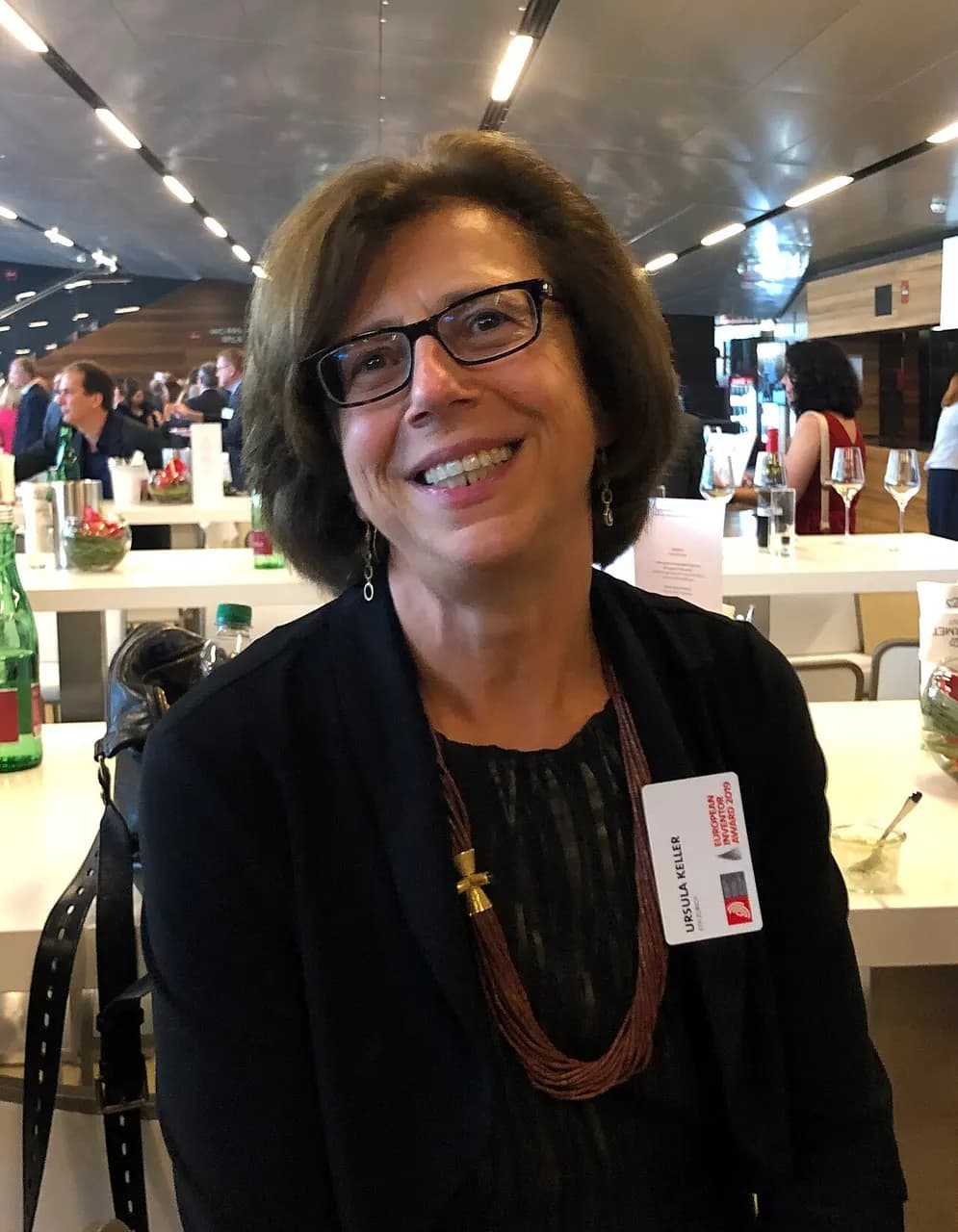 1993–now
Ursula Keller
Professor of Physics, Institute for Quantum Electronics
- Teaches
- Ultrafast laser physics · Attosecond science
- Experience
- ETH's first female physics professor, appointed in 1993; over 500 peer-reviewed papers and the Marcel Benoist Prize in 2022.
- R2007–now
Renato Renner
Professor of Theoretical Physics; head of the Quantum Information Theory group
- Teaches
- Quantum information theory · Foundations of quantum mechanics
- Experience
- Assistant professor at ETH from 2007, full professor since 2015; leads one of Europe's main quantum information groups.
- R2001–now
Roger Wattenhofer
Professor of Distributed Computing, Department of Information Technology and Electrical Engineering
- Teaches
- Distributed algorithms · Networks and blockchain
- Experience
- At ETH since 2001; his Principles of Distributed Computing course and lecture notes are used by universities worldwide.
The campus in photographs
Photographs come from Wikimedia Commons under free licences; the author and licence are shown on each image.
People who studied or taught here
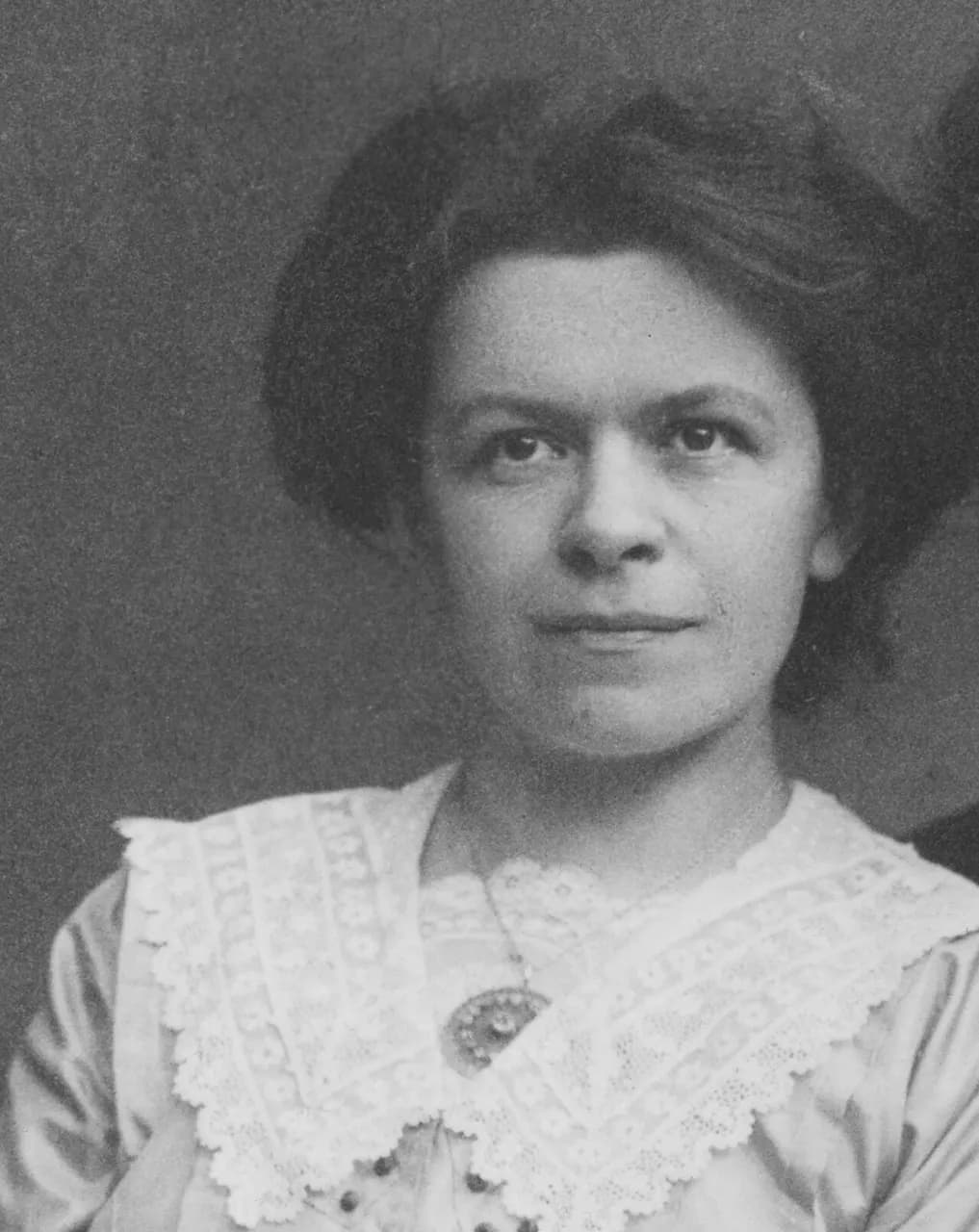
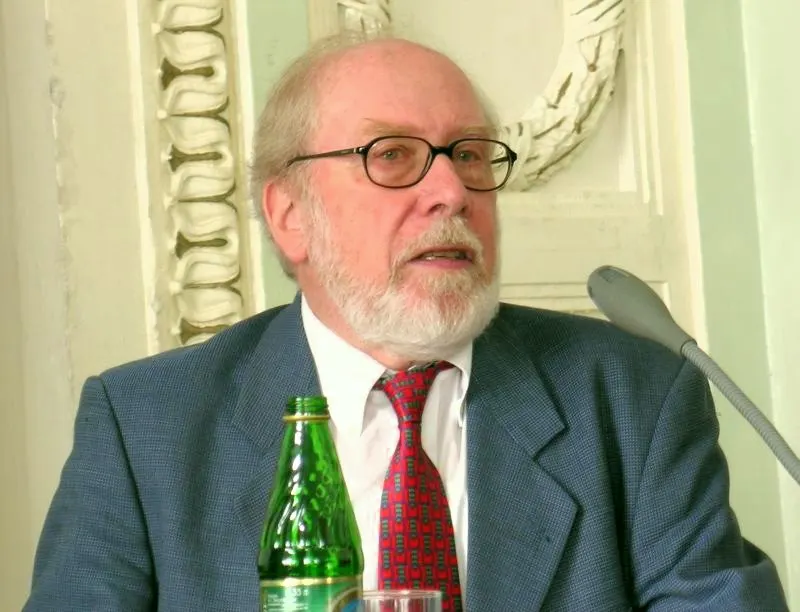
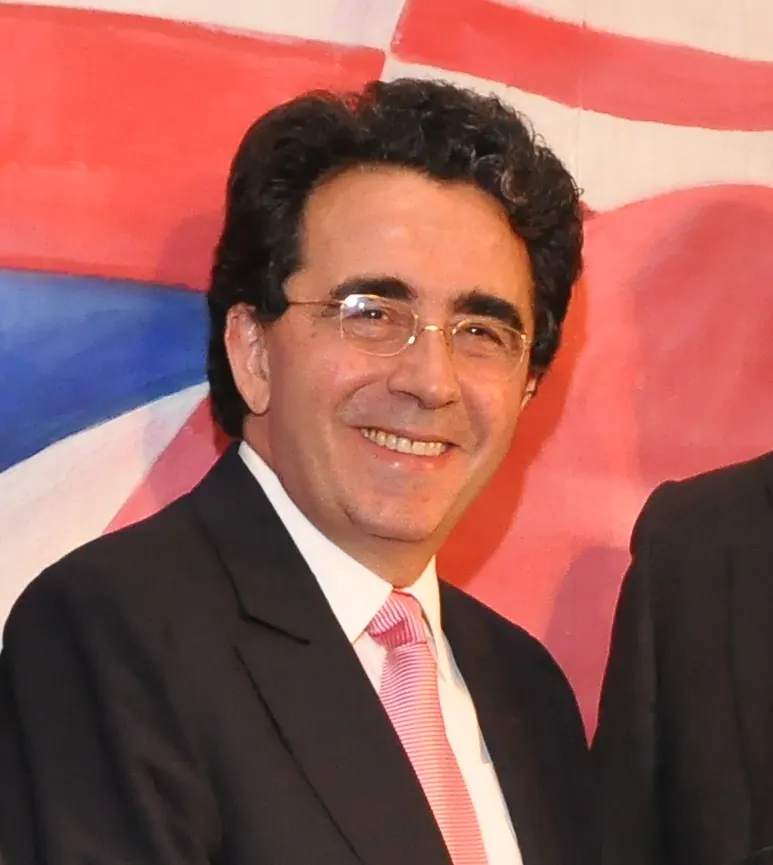
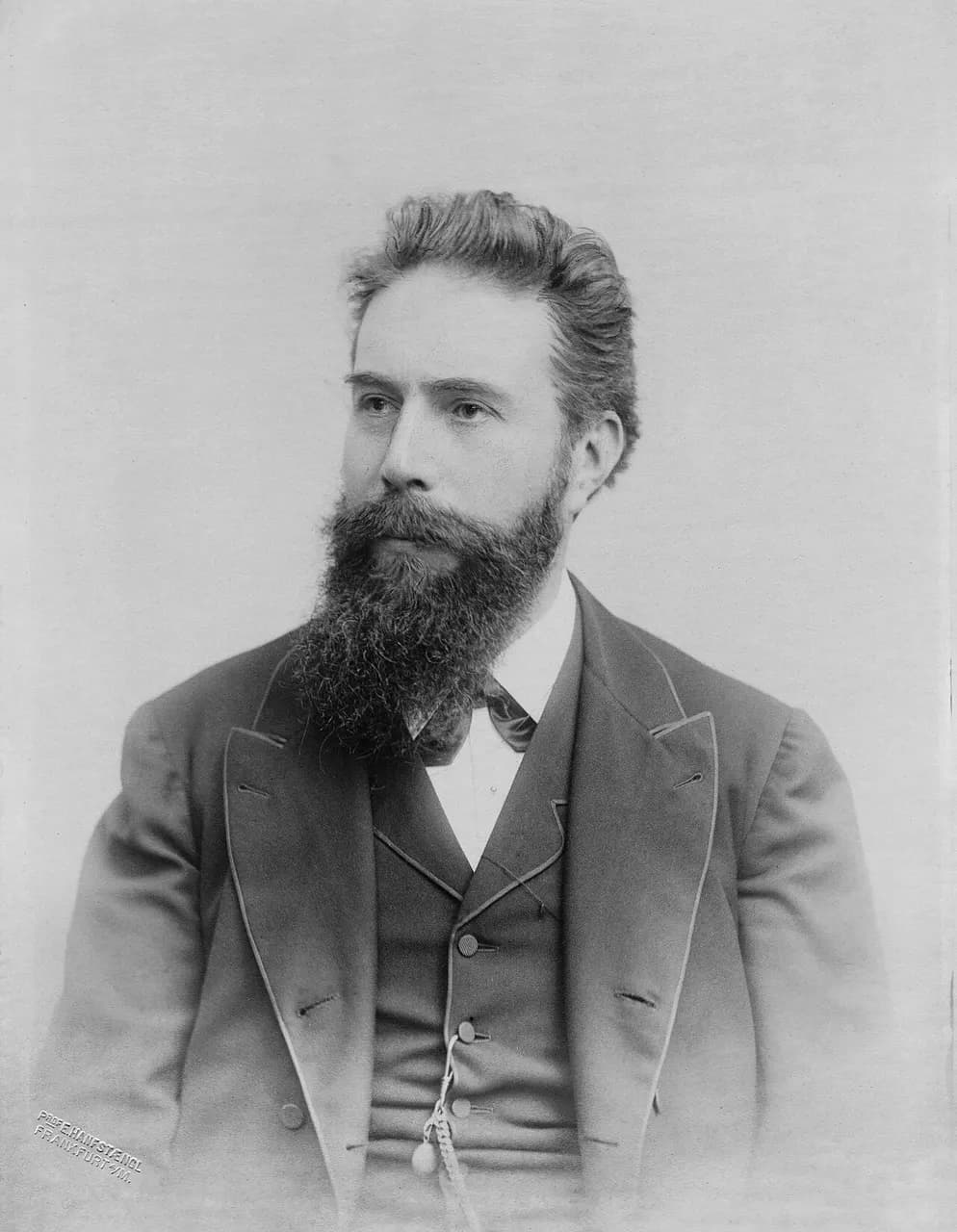 Wilhelm Röntgen
Physicist, first Nobel Prize in Physics 1901 for discovering X-rays
Graduate · 1865–1868
Reviews
No reviews yet. Visited, applied, or studied here? Be the first.