
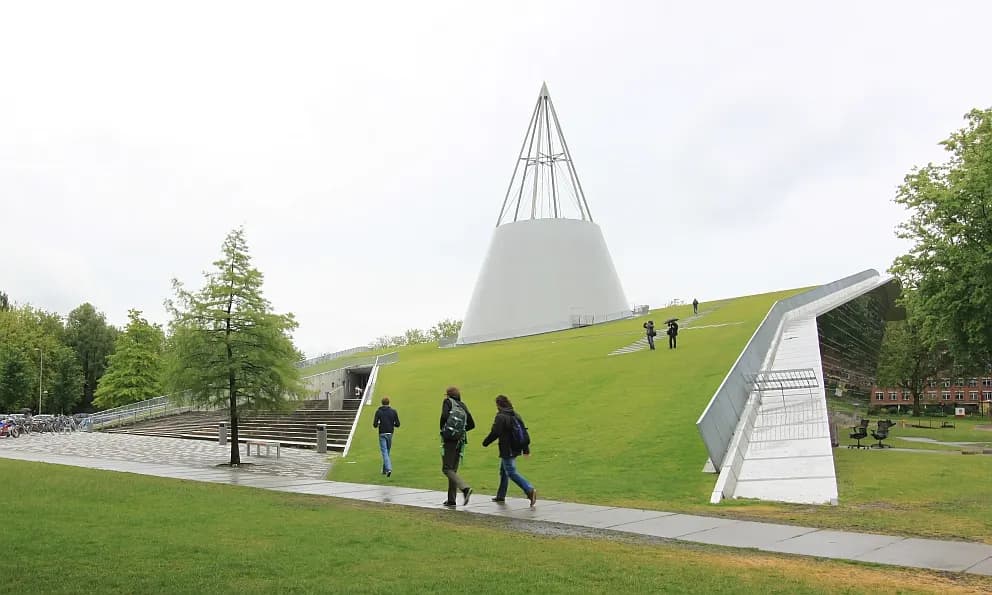
Photo: Nol Aders · CC BY-SA 3.0
Netherlands · Delft
Delft University of Technology
The Netherlands' oldest technical university, where students build solar cars and hyperloops
- QS World Ranking 2026
- #47
- Founded
- 1842
- Students
- 26,500
- Bachelor's degree
- 3 years
- Acceptance rate
- Open admission for most programmes; numerus fixus with selection in Aerospace (440 places), Computer Science (590) and Nanobiology
- Typical IB offer
- Full Diploma with Maths AA at HL and Physics at HL (Maths AI not accepted; CSE needs only maths); no points cut-off
- Language of instruction
- Dutch and English. Only four bachelor's programmes are taught fully in English: Aerospace Engineering, Computer Science and Engineering, Earth, Climate and Technology, and Nanobiology; the rest are Dutch or bilingual. IB students with English as an examined subject are exempt from IELTS. All master's programmes are in English.
Worth knowing
Delft's student solar team has won the World Solar Challenge, a 3 000 km race across Australia, eight times, most recently in 2025 with its Nuna car. Another student team, Delft Hyperloop, was the first in the world to run a live test on the 420-metre European Hyperloop Center track.
How hard is it to get in, and why
For the majority of programmes an IB Diploma with Mathematics Analysis and Approaches at HL and Physics at HL is enough: no essay, no interview, no quota. The three most popular English-taught programmes, Aerospace Engineering, Computer Science and Engineering and Nanobiology, are numerus fixus: thousands of applicants are ranked through an online selection procedure of tests and assignments for a few hundred places, with a 15 January deadline. The filter after entry is the binding study advice: earn fewer than 45 of the 60 first-year credits and you are removed from the programme.
What it costs
Tuition
$23k per year
Non-EU/EEA students pay the institutional fee of €19 906 a year in 2026–27, one flat rate for every bachelor's programme; EU/EEA students pay the statutory €2 694. The fee is indexed every year and jumped 15% in 2026.
Living costs
$14k–19k per year
Scholarships and financial aid
TU Delft offers no institutional scholarships to incoming international bachelor's students; the Justus and Louise van Effen Excellence Scholarship and the faculty awards are for master's applicants. Budget for the full fee plus living costs. Students may work up to 16 hours a week alongside their studies with a work permit arranged by the employer.
How to apply
Register in Studielink and then complete the TU Delft application with transcripts, predicted or final IB results and a €100 fee. Numerus fixus programmes close on 15 January and run a selection procedure between January and April based on online tests and assignments; results come mid-April and you must accept within two weeks. For all other programmes non-EU applicants must apply by 1 April. No interviews or essays. Once enrolled, a binding study advice requires at least 45 of 60 credits in year one.
Official websiteWhat makes it special
- Founded in 1842 by King William II as a Royal Academy to train engineers for the colonies; today the country's oldest and largest technical university.
- A single campus south of the medieval centre; its library, buried under a grass roof pierced by a steel cone, is the most photographed building in town.
- The Faculty of Aerospace Engineering is among the largest in Europe, with its own wind tunnels, flight simulator and a Cessna Citation research aircraft.
- Dozens of 'Dream Teams' build things for a living: solar cars, hydrogen racers, rockets, hyperloop pods and a human-powered submarine.
- Delft is Vermeer's town of canals and Delft Blue pottery; The Hague and Rotterdam are 15 minutes away by train, and everyone cycles.
About studying in Netherlands
Three-year bachelor's degrees, many of them taught entirely in English, with applications through the national Studielink portal. Popular programmes use numerus fixus selection with a 15 January deadline; the rest close on 1 May. Fees for non-EU students range from roughly €10,000 to €20,000 a year. Every university applies a binding study advice: earn most of the first-year credits or leave the programme.
Teaching staff
Who runs the university, who teaches, and how lessons actually work.
- Academic staff
- ~1 350
- Faculties
- 8
- First-year credits to stay
- 45 / 60
TU Delft has around 1,350 academic staff of all ranks, plus some 1,100 dedicated research staff, teaching roughly 26,500 students. Close to half the academic staff hold a foreign passport, and the university's Nobel line runs through Jacobus van 't Hoff, Heike Kamerlingh Onnes and Simon van der Meer. Dutch universities split the top job in two: the rector magnificus leads everything academic, the president of the executive board handles the institution, and beneath them sit eight faculties with their own deans — Aerospace Engineering, Applied Sciences, Architecture and the Built Environment, Civil Engineering and Geosciences, Electrical Engineering, Mathematics and Computer Science, Industrial Design Engineering, Mechanical Engineering, and Technology, Policy and Management.
The teaching year is cut into four quarters, each ending in an exam week, and courses pair a lecture with a compulsory instructie or project session. Design projects are the backbone: first-year aerospace students spend weeks in a team designing an aircraft to a written brief and defending it before staff, and industrial design students build physical prototypes from their first term. The hard edge is the binding study advice: earn fewer than 45 of the 60 first-year credits and you are removed from the programme and barred from re-entering it, which turns the first year into a genuine filter rather than a formality. Bachelor's teaching is largely in Dutch, with Aerospace Engineering, Computer Science and Engineering, Nanobiology and Applied Earth Sciences taught in English; the master's level is English throughout, and the bachelor's final project puts undergraduates inside a research group.
Delft's traditions are built around competition teams that keep winning. The Nuna solar car has taken the World Solar Challenge in Australia more times than any other entrant, and the Human Power Team holds the world speed record for a bicycle at over 144 km/h, both run by students on a year out from their degree. QuTech, a joint institute with the national research organisation TNO, built the first working quantum network link between cities, and the Faculty of Architecture — which rebuilt itself inside a converted 1920s chemistry building after a fire destroyed its tower in 2008 — is consistently ranked among the top few architecture schools in the world.
Teachers worth knowing
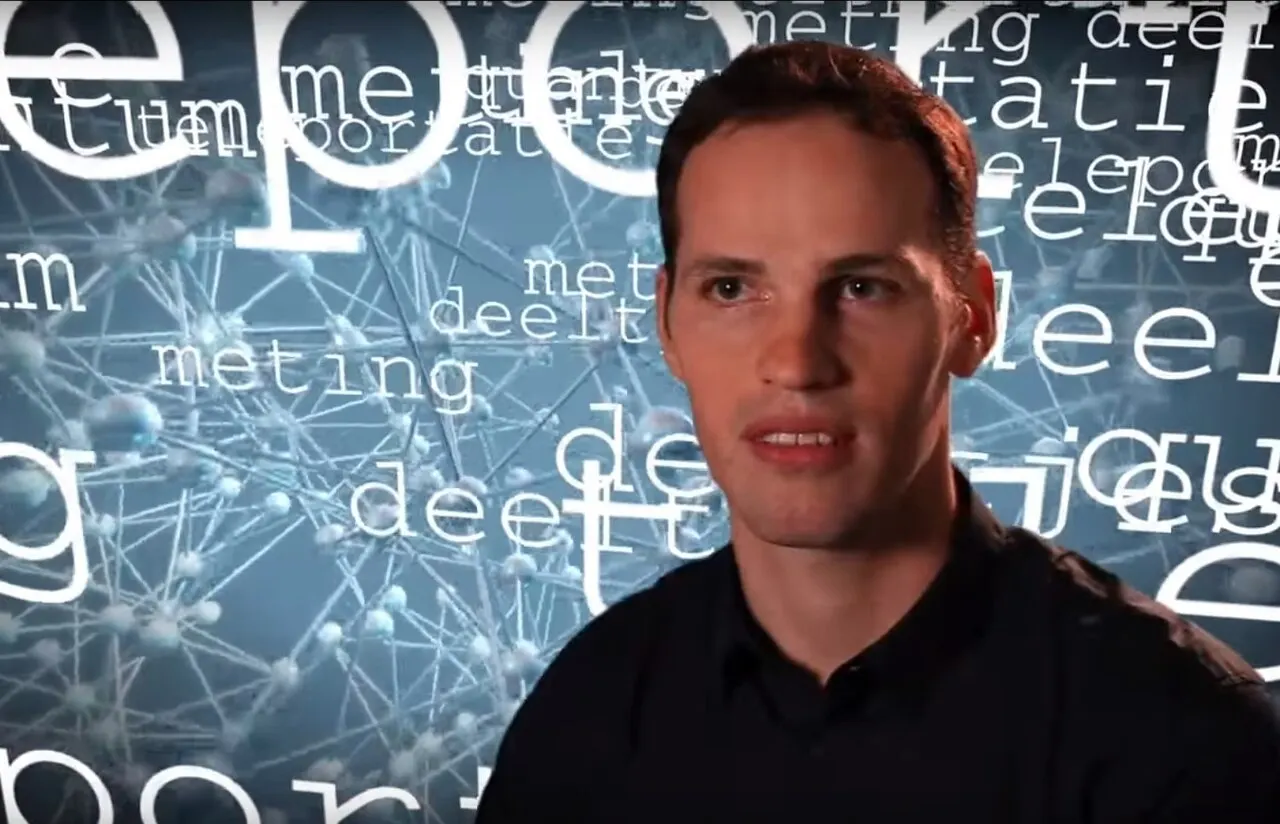 2007–now
Ronald Hanson
Professor at the Kavli Institute of Nanoscience and QuTech
- Teaches
- Quantum physics and quantum networks · Spin qubits in diamond
- Experience
- At TU Delft since 2007, full professor from 2012; his group performed the first loophole-free test of Bell's inequality in 2015.
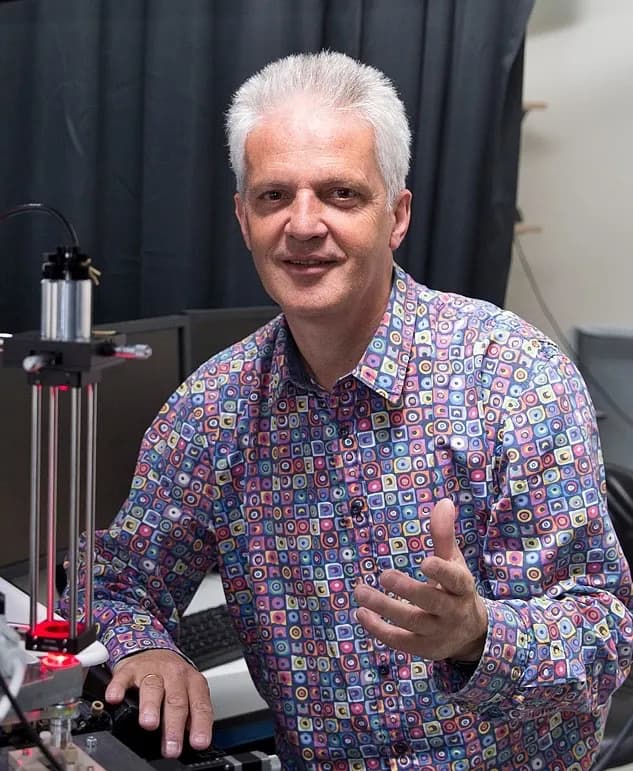 1993–now
Cees Dekker
Distinguished University Professor of Molecular Biophysics
- Teaches
- Bionanoscience · Single-molecule biophysics
- Experience
- At TU Delft since 1993, full professor from 2000 and Distinguished University Professor since 2007; founded the Department of Bionanoscience.
 2008–now
Winy Maas
Professor of Architecture and Urban Design; director of The Why Factory
- Teaches
- Architectural design · Urbanism and future cities
- Experience
- Founded The Why Factory at the TU Delft Faculty of Architecture in 2008; co-founder of the MVRDV studio and previously a teacher at Yale, Berlage and MIT.
The campus in photographs
Photographs come from Wikimedia Commons under free licences; the author and licence are shown on each image.
People who studied or taught here
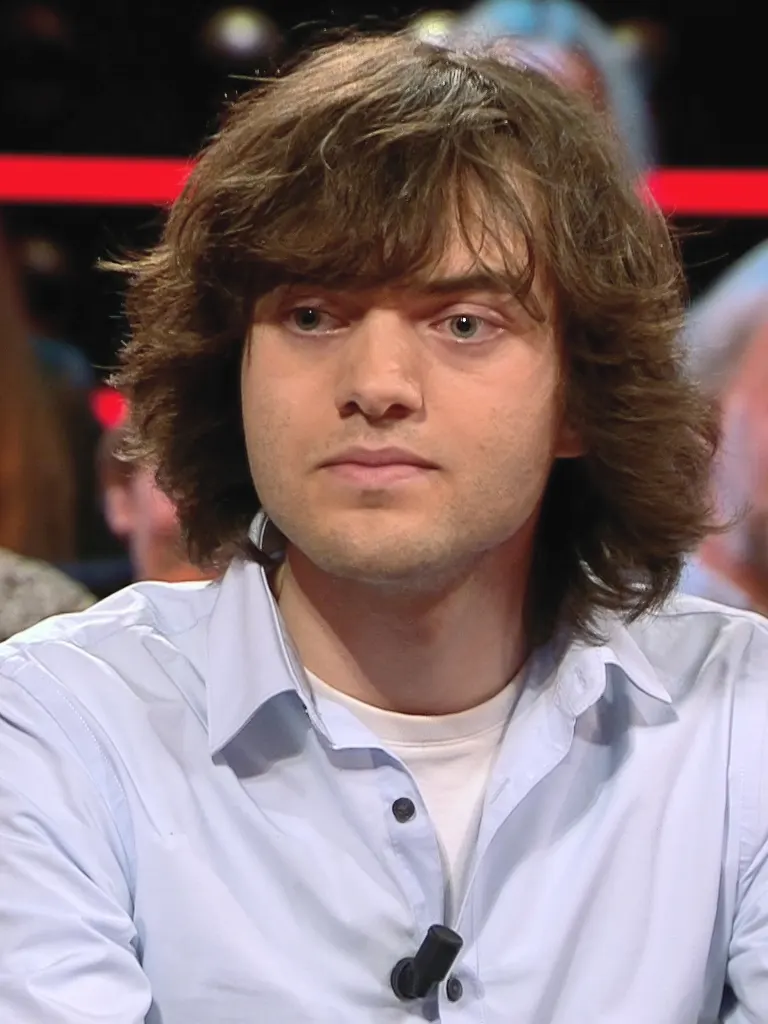
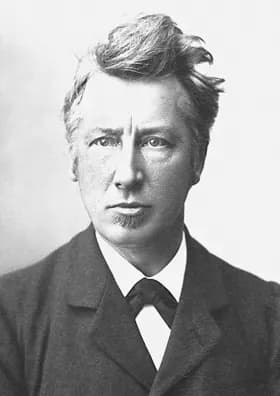
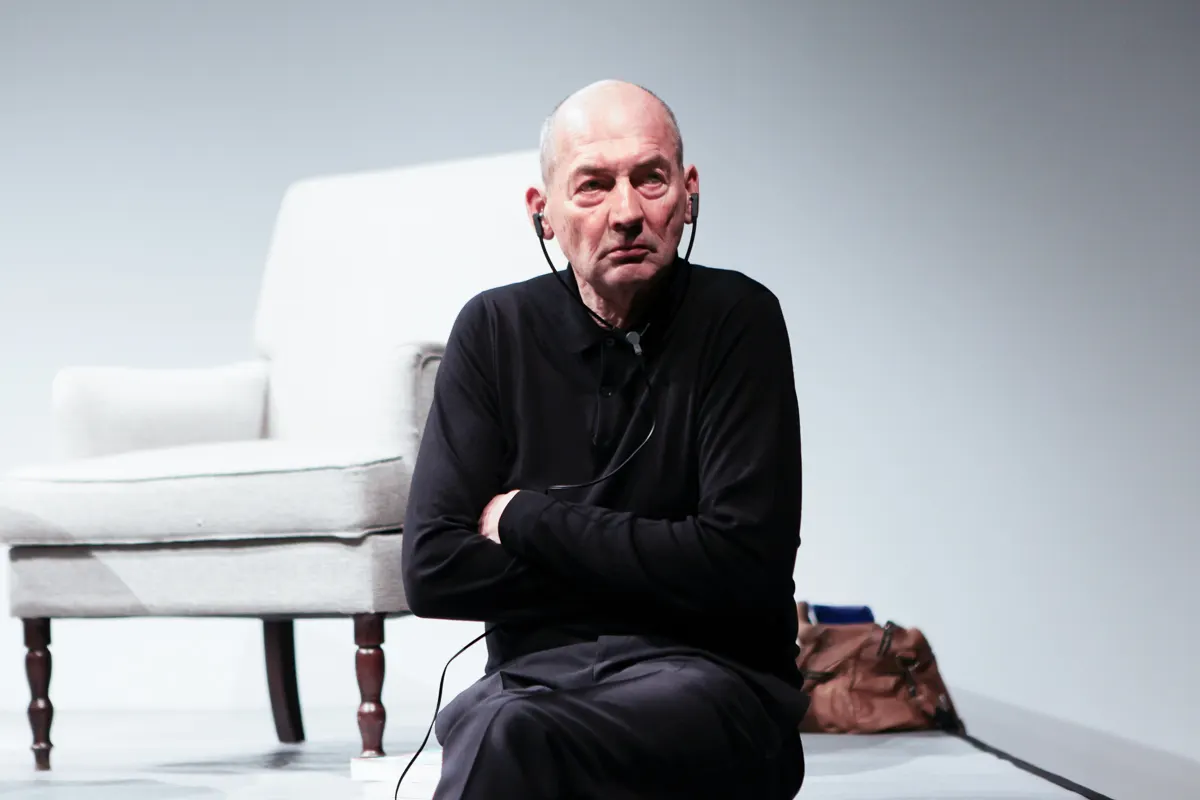
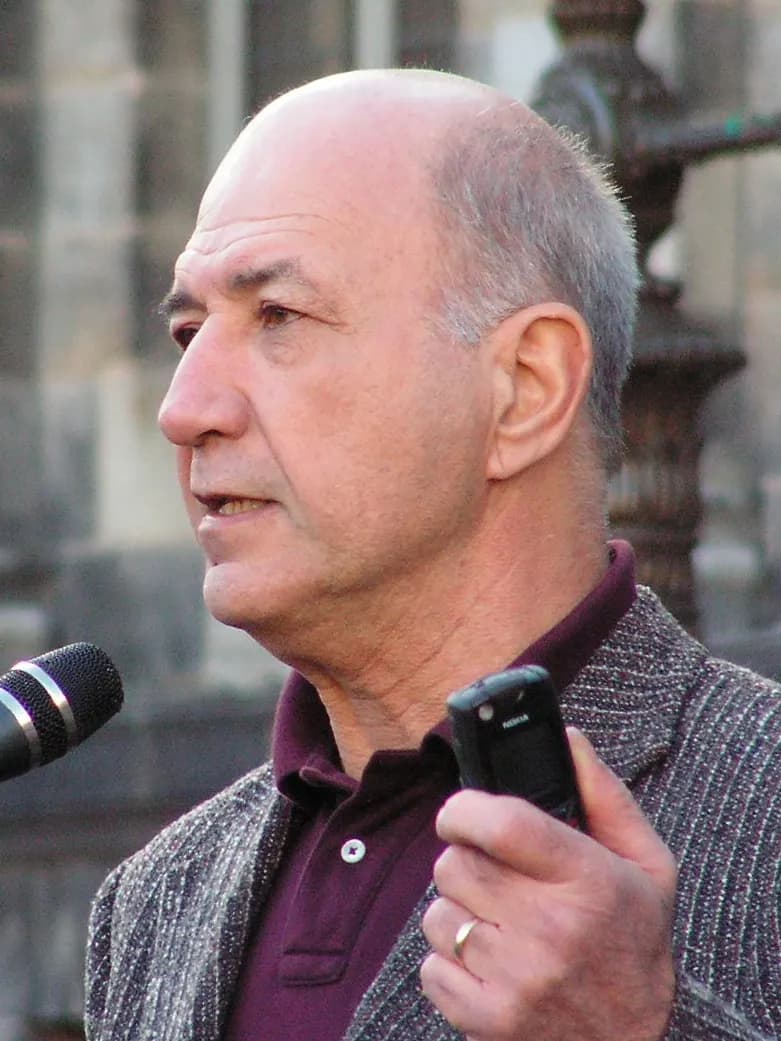
Reviews
No reviews yet. Visited, applied, or studied here? Be the first.