
Chemistry
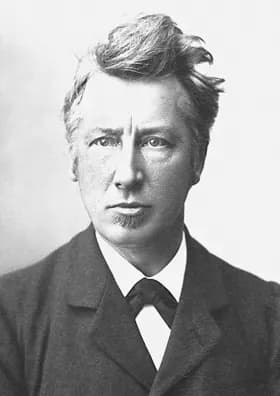
Jacobus van 't Hoff
Chemist, first Nobel Prize in Chemistry 1901
Born 1852 · Died 1911
Photo: Unknown authorUnknown author · Public domain
Jacobus van 't Hoff proposed that carbon atoms arrange their bonds in three dimensions as a tetrahedron, founding the study of molecular shape. He received the first Nobel Prize in Chemistry for his work on chemical thermodynamics and solutions.
Key achievements
- First Nobel Prize in Chemistry ever awarded, 1901
- Founded stereochemistry with the tetrahedral carbon atom, 1874
- Discovered the laws of chemical dynamics and osmotic pressure
Universities
Delft
Studied at Delft Polytechnic from 1869 and completed the three-year technology course in two years.
Amsterdam
Professor of chemistry, mineralogy and geology at the University of Amsterdam from 1878.
Facts
- He published the tetrahedral carbon idea at twenty-two, and a senior chemist publicly mocked it as fantasy.
- He was drawn to poetry and philosophy as a student and argued that imagination was essential to scientific work.
- He built molecular models from cardboard to convince colleagues that shape mattered.
Photographs
Photographs come from Wikimedia Commons under free licences; the author and licence are shown on each image.