
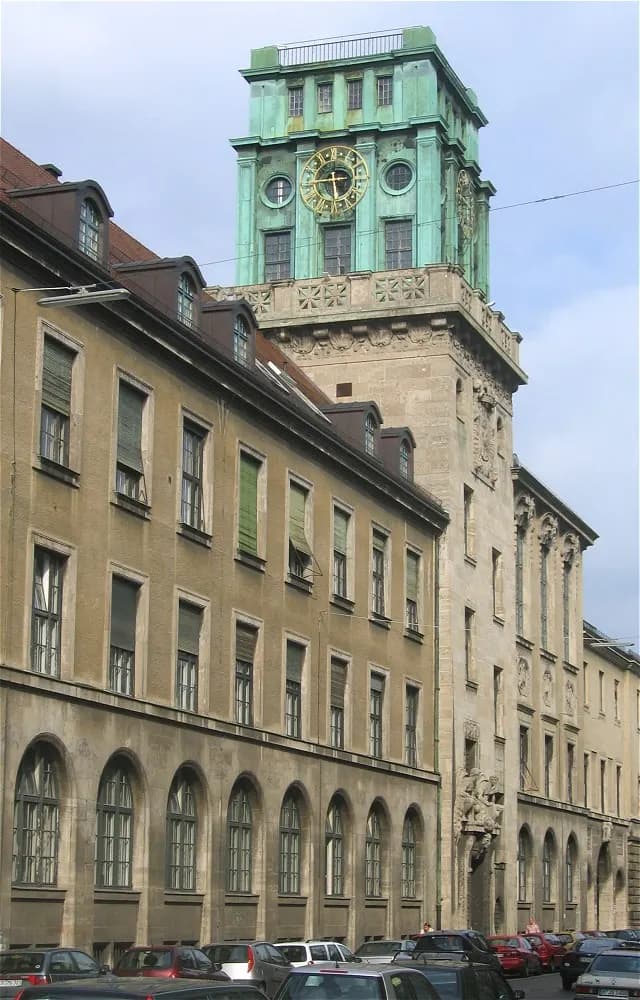
Photo: Rufus46 · CC BY-SA 3.0
Germany · Munich
Technical University of Munich
Germany's engineering powerhouse in the city of BMW, Siemens and the Alps
- QS World Ranking 2026
- #22
- Founded
- 1868
- Students
- 50,000
- Bachelor's degree
- 3 years
- Acceptance rate
- Aptitude assessment, no fixed quota; strong school grades in maths and science usually suffice
- Typical IB offer
- Full Diploma with Maths (AA, or AI at HL) and a natural science under German KMK rules; no points cut-off, aptitude assessment instead
- Language of instruction
- Mostly German: C1 (TestDaF 4×4, DSH-2 or Goethe C1) is required before the application deadline. A handful of bachelor's programmes are in English, notably Management and Technology in Munich, Aerospace at the Ottobrunn campus and Bioeconomy in Straubing. Master's programmes are largely in English.
Worth knowing
In the mathematics and informatics building on the Garching campus two enormous tube slides drop 13 metres from the top floor to the ground-floor hall. They are an artwork, funded under a German rule that universities spend part of every construction budget on art, and students genuinely use them between lectures.
How hard is it to get in, and why
Most bachelor's programmes use an aptitude assessment rather than a quota: stage one scores your final grades and subject grades in maths, science and language; a high score means direct admission, a low one rejection, and the middle band is invited to a written test or interview. No essays or references are involved. The obstacles for an IB student are practical: German at C1 for nearly every programme, a document check by uni-assist and an application window that closes in July. Once in, roughly 60 ECTS credits must be earned within the first two years or exmatriculation follows.
What it costs
Tuition
$5k–7k per year
Since winter semester 2024/25 Bavaria lets TUM charge non-EU students €2 000–3 000 per semester depending on the programme (Informatics: €3 000), plus a semester contribution of about €85. EU citizens and holders of a German Abitur pay only the contribution.
Living costs
$14k–21k per year
Scholarships and financial aid
TUM can waive the non-EU tuition fee for outstanding results or demonstrated need, but each case is reviewed individually and nothing is automatic. The TUM International Student Scholarship pays a one-off €500–1 800 per semester to enrolled students in financial difficulty, and the nationwide Deutschlandstipendium adds €300 a month for a year on merit. Compared with Dutch or British fees, the bill is small even without aid.
How to apply
Apply through the TUMonline portal for a winter-semester start; most bachelor's programmes open on 15 May and close on 15 July, though some schools close as early as 31 May, so check the programme page. Applicants with foreign school certificates first obtain a preliminary document check (VPD) from uni-assist and must upload the German C1 certificate by the deadline. Admission is by aptitude assessment: a points score on grades, then for borderline candidates a written test or interview. No essays, no references. The English-taught Management and Technology programme also runs an aptitude assessment and waives the language certificate.
Official websiteWhat makes it special
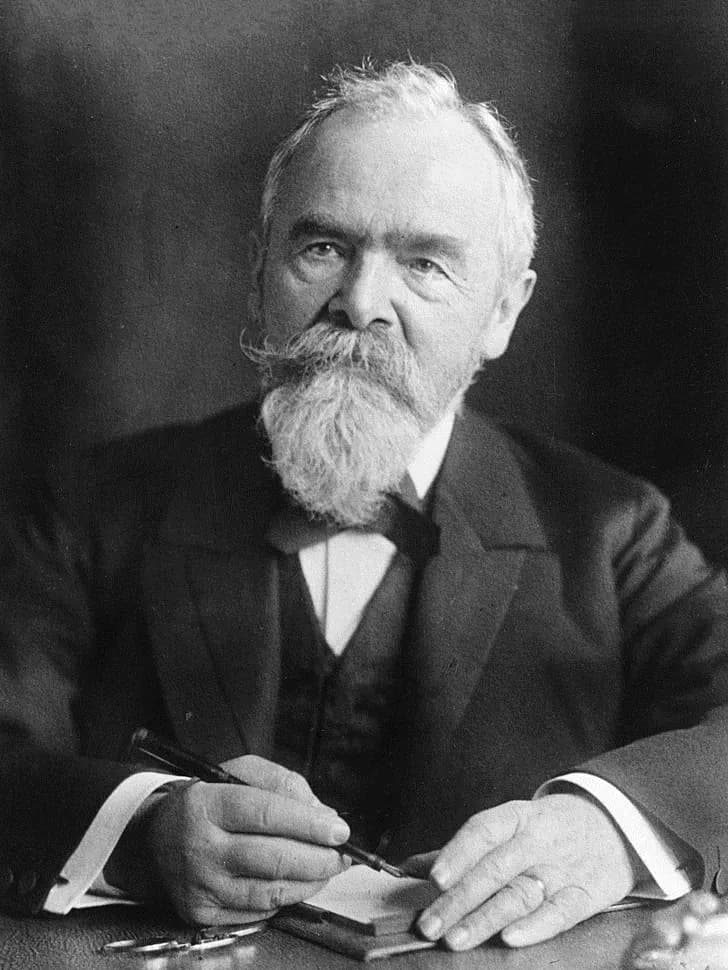
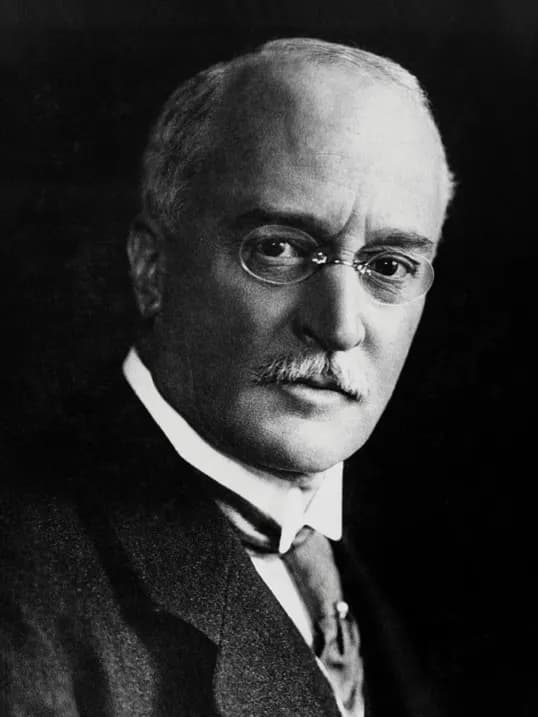
- Founded in 1868 by King Ludwig II; Rudolf Diesel graduated here in 1880, Carl von Linde taught refrigeration here, and 18 Nobel laureates are on the roll.
- Several campuses: the city-centre main site, the Garching research campus with its own neutron source, Weihenstephan for life sciences and brewing, plus Straubing and Heilbronn.
- TUM Hyperloop won all four SpaceX pod competitions in a row and set the 463 km/h record in 2019; the team now runs a full-scale test track.
- Around half of the 50 000 students come from abroad, and the Management and Technology bachelor's lets you combine business with an engineering or informatics track, entirely in English.
- Munich hosts BMW, Siemens, Infineon and a dense start-up scene; the Alps are an hour away and the English Garden is a short cycle from the main building.
About studying in Germany
Public universities are close to free for most students; Bavaria, where TU Munich sits, has introduced a fee for students from outside the EU, still a fraction of Anglo-American prices. Most bachelor's programmes are taught in German (level C1 is expected), with a growing number in English. Admission for an IB Diploma is largely formal, and the real test is keeping up with a demanding, self-directed course.
Teaching staff
Who runs the university, who teaches, and how lessons actually work.
- Full professors
- ~700
- Academic staff
- ~8 400
- Nobel laureates affiliated
- 19
TUM employs around 700 full professors supported by some 8,400 additional academic staff, and teaches close to 52,000 students, which makes the headline ratio a blunt 70-plus students per chair — the number that matters is the seminar and lab group, where twenty to thirty is normal. Roughly a third of the professors were hired from outside Germany, and nineteen Nobel laureates belong to the university's history, from Rudolf Diesel's teachers to Klaus von Klitzing and Ernst Otto Fischer. Since the 2019 reorganisation the president chairs seven schools rather than fifteen faculties: Engineering and Design, Computation, Information and Technology, Natural Sciences, Life Sciences, Medicine and Health, Management, and Social Sciences and Technology, with 29 research departments underneath them and a dean at the head of each school.
The German teaching rhythm is Vorlesung plus Übung: a professor delivers the lecture to a hall of several hundred, and a parallel tutorial in groups of twenty-five drills the same material on the blackboard, usually led by a doctoral student. Almost everything is assessed by a single written examination at the end of the semester, often ninety minutes for a whole course, and a failed exam can be retaken — twice, and no more. Nearly all bachelor's teaching is in German at C1 level, with Management and Technology, Aerospace at Ottobrunn and Bioeconomy at Straubing as the English-taught exceptions. Undergraduates get into laboratories early through the compulsory industrial internship and the bachelor's thesis, and Garching's research campus — with its own neutron source, FRM II — sits a U-Bahn ride from the lecture halls.
TUM's signature is that students build hardware rather than only calculate it. TUM Hyperloop won all four SpaceX pod competitions in a row and set a 463 km/h record in 2019; the team now runs its own full-scale test tube in Ottobrunn. WARR Space Labs flies rockets and satellites built by undergraduates, and the Weihenstephan campus runs a working brewery where food-technology students make beer under a faculty that has taught brewing science since 1852. The mathematics and informatics building in Garching is best known for two thirteen-metre tube slides from the top floor to the entrance hall, paid for out of the art budget and genuinely used between lectures.
Teachers worth knowing
- D2009–now
Daniel Cremers
Professor of Informatics and Mathematics, Chair of Computer Vision and Artificial Intelligence
- Teaches
- Computer vision · Machine learning and optimisation
- Experience
- Chair at TUM since 2009; holder of three consecutive European Research Council grants and the 2016 Leibniz Prize.
- S2018–2025
Sami Haddadin
Chair of Robotics and Systems Intelligence; founding director of the Munich Institute of Robotics and Machine Intelligence
- Teaches
- Robotics and human–robot interaction · Machine intelligence
- Experience
- Held the robotics chair at TUM from 2018 to 2025 and built MIRMI into the university's robotics institute; awarded the Leibniz Prize in 2019.
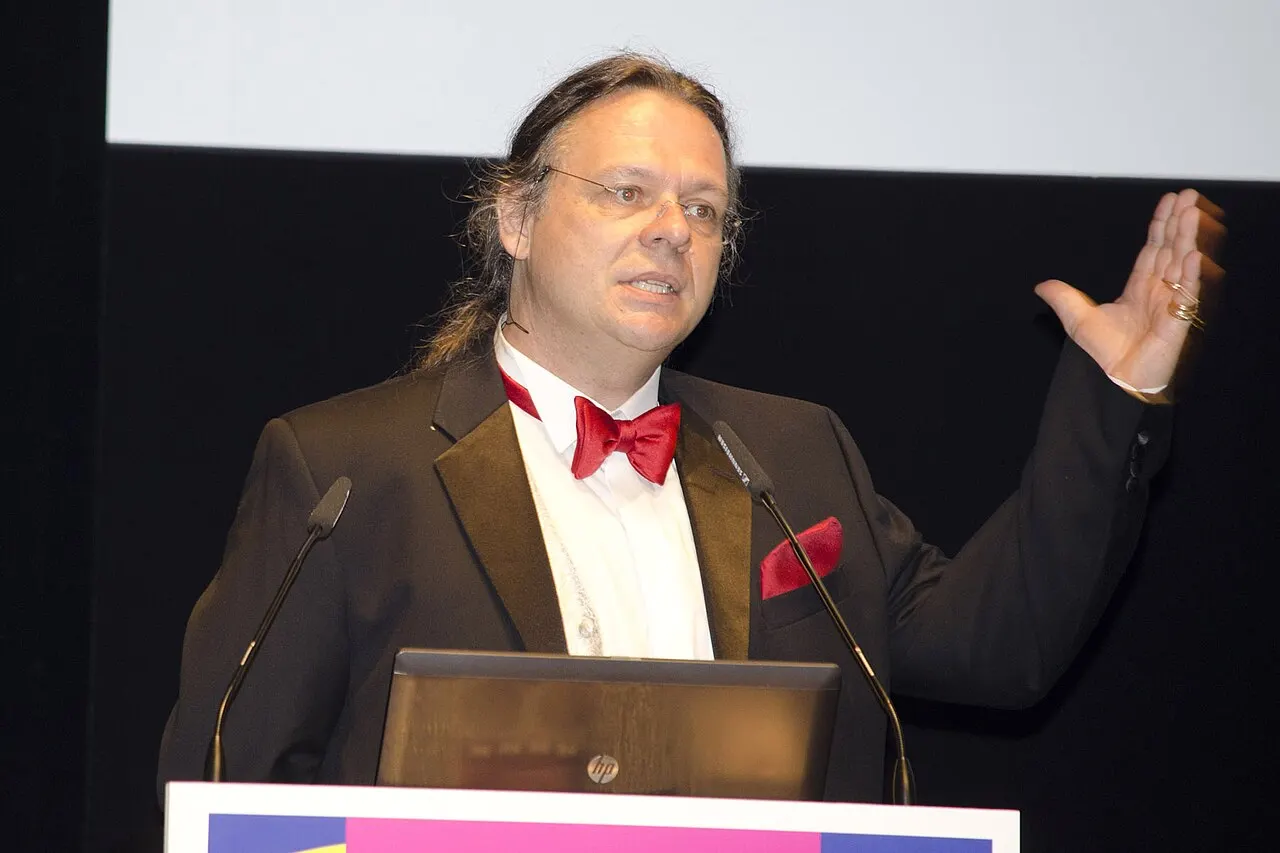 2009–now
Burkhard Rost
Alexander von Humboldt Professor, Chair of Bioinformatics and Computational Biology
- Teaches
- Bioinformatics · Protein structure prediction
- Experience
- Chair of bioinformatics at TUM since 2009; previously at Columbia University, and president of the International Society for Computational Biology in 2007–2014.
The campus in photographs
Photographs come from Wikimedia Commons under free licences; the author and licence are shown on each image.
People who studied or taught here
- R
Reviews
No reviews yet. Visited, applied, or studied here? Be the first.