
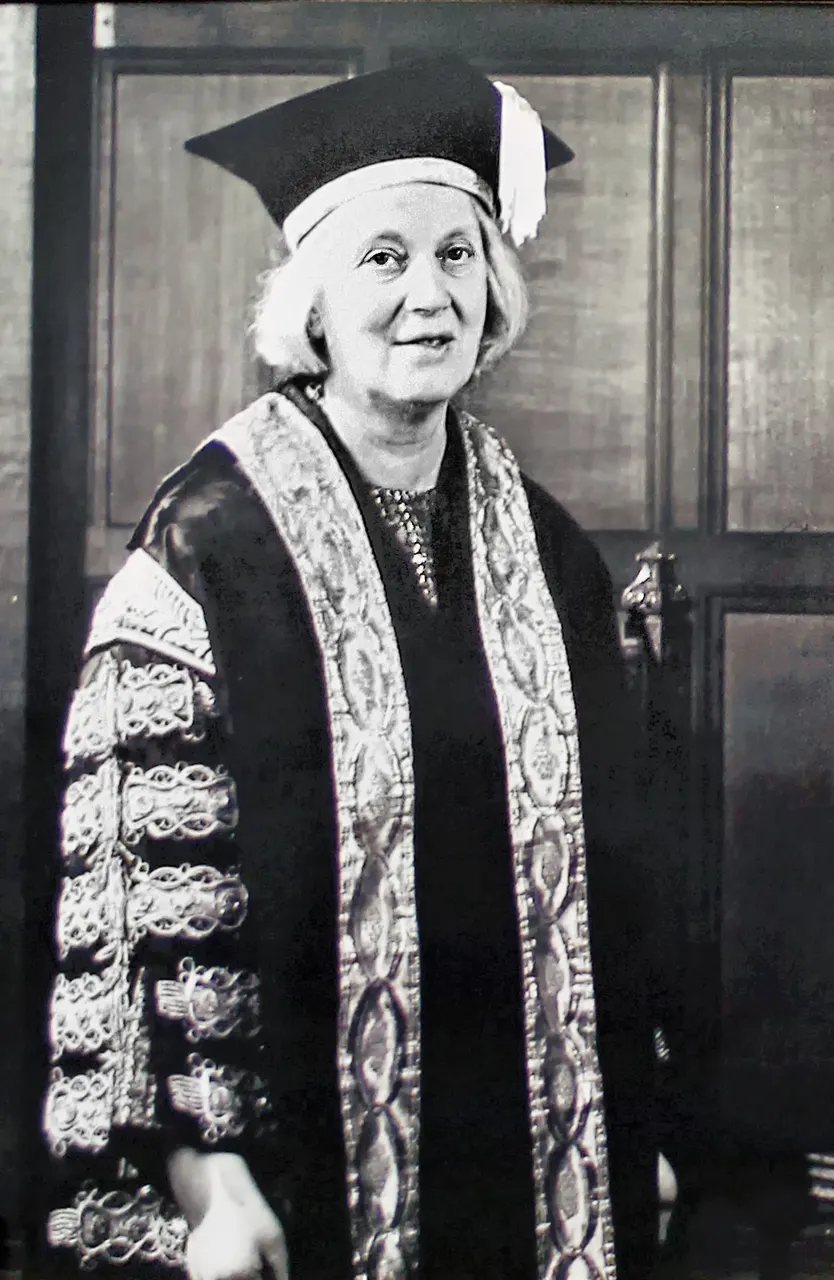
Dorothy Hodgkin
Chemist, Nobel Prize in Chemistry 1964 for determining the structures of biochemical substances
Born 1910 · Died 1994
Photo: University of Bristol · CC BY-SA 2.0
«I was captured for life by chemistry and by crystals.»
Dorothy Hodgkin worked out the three-dimensional structures of penicillin, vitamin B12 and eventually insulin, using X-ray crystallography on molecules everyone thought were too complex. She remains the only British woman to have won a Nobel Prize in a science.
Key achievements
- Nobel Prize in Chemistry, 1964, for biochemical structures
- Determined the structures of penicillin, vitamin B12 and insulin
- Only British woman to win a Nobel science prize
Universities
Oxford, England
Read chemistry at Somerville College and spent almost her entire career at Oxford, where she taught Margaret Thatcher.
Cambridge, England
Took her PhD in 1937 working with J. D. Bernal on the X-ray crystallography of biological molecules.
Facts
- Insulin took her thirty-four years: she began the work in 1934 and published the structure in 1969.
- She developed rheumatoid arthritis in her twenties and worked with badly deformed hands for the rest of her life.
- A British newspaper announced her Nobel Prize with the headline about an Oxford housewife winning a prize.
Photographs
Photographs come from Wikimedia Commons under free licences; the author and licence are shown on each image.