
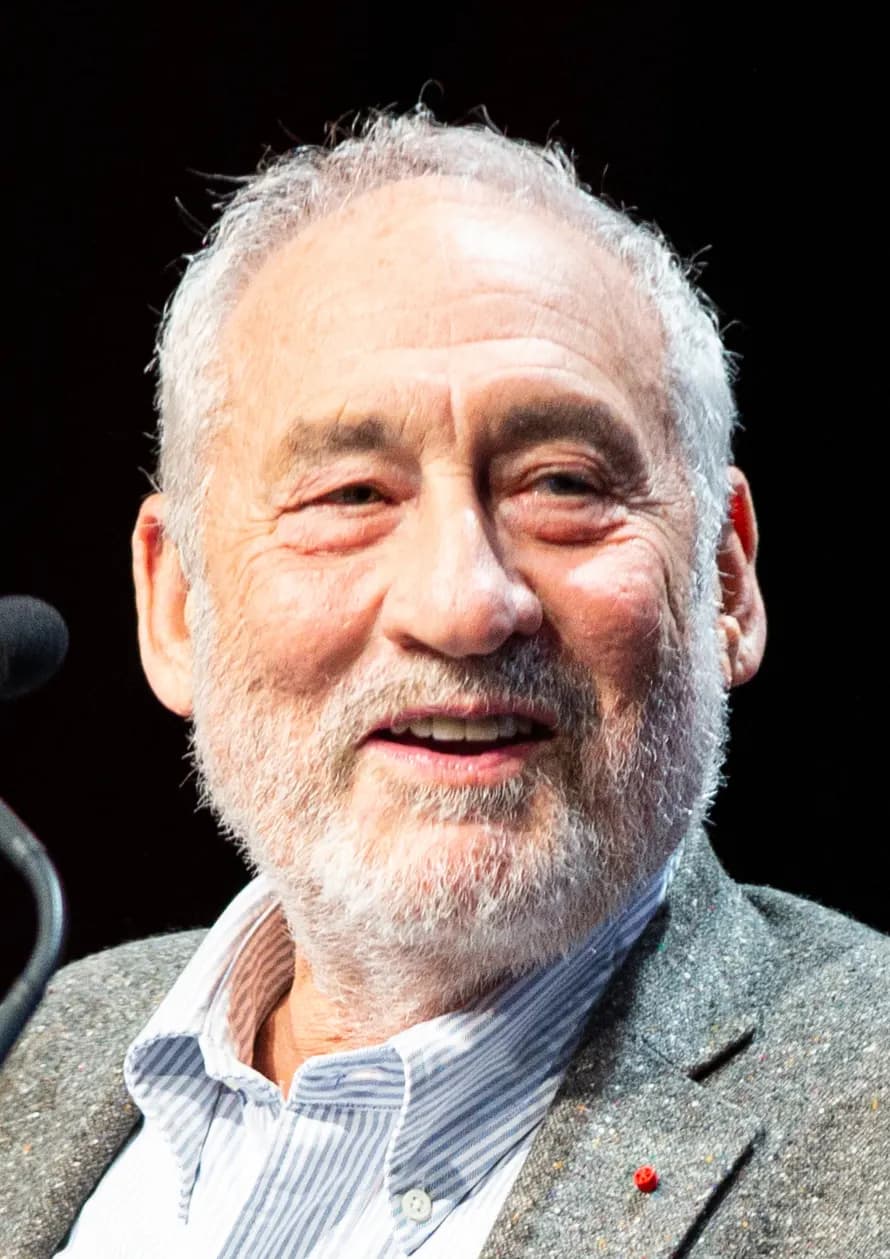
Joseph Stiglitz
Economist, Nobel Prize in Economics 2001 for work on asymmetric information
Born 1943
Photo: Jérémy Barande · CC BY-SA 2.0
Joseph Stiglitz showed what happens to markets when one side knows more than the other, which explains why insurance, lending and second-hand cars behave the way they do. He was chief economist of the World Bank and became one of globalisation's most prominent critics.
Key achievements
- Nobel Prize in Economics, 2001, for markets with asymmetric information
- Chief economist of the World Bank, 1997–2000
Universities
New York, Manhattan
University Professor at Columbia since 2001.
Cambridge, Massachusetts
Took his PhD in economics in 1967 under Robert Solow.
Cambridge, England
Spent a Fulbright year at Gonville and Caius College working with James Meade and Joan Robinson.
Facts
- He grew up in Gary, Indiana, a steel town whose decline he has said shaped his interest in inequality.
- He became a full professor at Yale at twenty-six.
- His book Globalization and Its Discontents, written after leaving the World Bank, has been translated into more than thirty languages.
Photographs
Photographs come from Wikimedia Commons under free licences; the author and licence are shown on each image.